

Can a Truck Driver See Your Car, or Are You in a No-zone?
If you can’t see the truck driver’s face in the mirror, assume the driver can’t see you. You are in a no-zone, or close enough that the driver may not react in time. That can lead to sudden lane changes, tailgating, side-swipe crashes, or a rear-end impact. This guide explains where trucks lose sight of passenger cars, how reaction time changes each position, and what to do around the front, sides, and rear of a truck.
Truck no-zone basics
Truck blind spots are also called no-zones. Blind spots are commonly present at the front, rear, left side, and right side of a commercial motor vehicle. Their size changes with mirror setup, cab height, trailer length, road grade, curves, and weather. A fixed diagram can mislead you in live traffic.
Side mirrors are often the driver’s main visibility tool because the trailer blocks the direct rear view. The key question is not only “Can the driver see my car?” but also “Can the driver see it clearly enough, long enough, to react?”
Visibility and reaction time are different. A driver may catch a car in a mirror and still have too little space or time to brake, steer, or hold lane position safely. That matters most when a car is close to the trailer, moving faster than the truck, or changing lanes into a short gap.
Why mirrors and cab height matter
Trucks sit higher than passenger cars, so their mirrors have to cover a lot of side and rear blind area. The higher cab gives a better forward view, but it also creates more hidden space near the hood, along the doors, and beside the trailer. The larger the rig, the more careful you should be with lane position.
If the mirror view is blocked by your car’s position, assume the truck driver has a weaker view of you too. That is the practical meaning of the mirror rule, and it works best as a warning, not a guarantee.
Why visibility and reaction time are not the same thing
A car can be visible and still be unsafe. A driver who sees you in the mirror may need extra space to avoid a conflict, especially near an exit, a merge point, or a turn. In other words, “seen” does not always mean “safe to stay there.”
Suppose a sedan paces a trailer on the right side for several seconds while both vehicles approach a curve. The truck driver may catch the car in the mirror, but the car still sits in a lane position where a lane change, drift, or turn can happen with almost no margin.
Can a truck driver see you beside the trailer?
Sometimes yes, sometimes no. Beside the trailer is one of the most sensitive positions because it sits near the truck’s side blind area, and the answer changes with which side you are on, how far forward you are, and whether the truck is turning, merging, or holding steady speed. Treat it as a live visibility problem, not a yes-or-no box.
The right-side blind area
The right-side blind spot is usually the largest. It can extend across three lanes of traffic, and when a truck is moving it can be huge. That makes the passenger side of a semi the hardest place to trust, especially near the cab and the trailer’s midpoint.
If your front bumper is hidden from the truck mirror, you are in a risky zone. If your whole car sits there, there is very little room for error, and the truck driver may not have enough time to correct even if the car is visible at some point.
The left-side blind area
The left side is usually smaller than the right, but it is still a no-zone. A car running beside the driver’s door or left rear quarter can disappear from the mirror view if it slips too far back or too close to the trailer. That risk rises during lane changes and on curves.
A common first-timer mistake is to stay even with the rear half of the trailer because the lane “looks open.” It may look open to you, but the truck driver may have a limited view of a car that is hanging beside the trailer instead of moving past it.
When a driver may see you but still cannot react in time
Even when a truck driver can spot your car, the truck may still need much more room to respond. A fully-loaded semi-truck needs a lot more distance to stop than a passenger car. That gap matters when a car cuts in too early or brakes hard in front of a truck.
Passenger drivers often think in car lengths. Trucks need more space than that. A cut-in that feels minor from a sedan can leave a loaded semi with too little distance to brake or steer safely.
Truck no-zone check table
This table turns the no-zone into a lane-position check. Use it as a quick decision aid, not a fixed map. Truck length, mirror angle, and road shape can change what the driver can see from one block to the next.
| Roadway position | What the truck driver can likely see | Main danger | Safest move |
|---|---|---|---|
| Behind the trailer | Some following traffic through mirrors, but the trailer blocks direct rear view | Tailgating, rear-end impact, and little room for braking | Drop back and stay far enough behind to see both mirrors if possible |
| In front of the bumper | Usually the forward lane and near-front area, but the truck still needs space to react | Cut-off risk if you merge too soon | Merge only after you have clear space ahead and can maintain speed |
| Left rear quarter | May be partly visible in the left mirror | Side-swipe risk if the truck moves left or you linger beside the trailer | Pass steadily and do not pace the trailer |
| Left front quarter | Usually more visible than the left rear quarter | Still risky if you hang in the blind area near the cab | Finish the pass without slowing beside the cab |
| Right side beside cab | May be hard to see because the right side blind spot is large | High chance of being hidden during lane changes or turns | Move away from the truck’s right side as soon as you can safely do so |
| Right side beside trailer | May be visible in the mirror at times, but often with limited reaction margin | Most dangerous for right-turn conflicts and sideswipes | Do not pass on the right near an intersection or turn |
Which side of a semi has the biggest blind spot?
The right side is usually the worst blind spot on a semi truck. It can extend across three lanes of traffic, and the problem gets worse when the truck is moving, turning, or climbing where road shape changes the sightline. The left side still has blind area, but the right side is the one to respect most.
How trailer length changes the danger
Longer trailers create more side length for a car to pace. That increases the chance that you sit in the truck’s blind area for more time, which raises the odds of a lane-change conflict or a sideswipe crash. Shorter trailers do not remove the risk; they only change where the hidden zone sits.
Because blind areas vary by model, you should treat any exact diagram as a starting point only. Mirror adjustment and trailer length change the edges of the zone.
What road curves and grades change
On a curve, the truck’s sightline bends with the road. On an uphill grade, the trailer and cab can change the driver’s angle on nearby lanes. In rain, fog, or spray, mirror use becomes less forgiving because a driver may need more time to confirm what is beside the rig.
That is why the same car position can feel safe on a straight, dry freeway and risky on a curved on-ramp or a steep city approach.
What should you do next to a truck?
Do not linger beside a semi truck. Pass cleanly, merge with space, and get out of the no-zone as soon as traffic allows. If you are boxed in already, your first job is to create a gap, not to match the truck’s speed and hope the mirror will protect you.
How to pass without pacing the trailer
Use a steady, decisive pass. The danger grows when your car stays even with the trailer for too long, because that keeps you in the blind area and increases sideswipe risk. If you are on the right side, pass only when the lane is clear and you can continue through without slowing beside the truck.
- Check the truck mirrors before you move into the adjacent lane.
- Pass at a steady speed.
- Do not hang beside the cab or trailer midpoint.
- Return only after you can see the truck in your mirror with space to spare.
How to merge without cutting off the truck
Leave enough space in front and behind when you merge. The key idea is simple: do not squeeze into a gap that forces the truck to brake hard. If you cut in too close, the truck’s long stopping distance can turn a small mistake into a rear-end crash.
Safe following should be based on visible space and reaction room, not a short fixed gap.
What to do if you are boxed
If a truck is beside you and traffic blocks both lanes, hold a steady line, avoid sudden braking, and look for the first safe gap ahead or behind. Do not drift toward the trailer to “peek” around it. Do not brake-check or try to out-negotiate the truck at the last second.
Say your sedan is stuck beside a box trailer on a two-lane ramp. If the truck begins to move over, your safest move is to ease off, drop back, and let the truck clear the lane before you try to pass or merge again.
Why do no-zone crashes cause sideswipes?
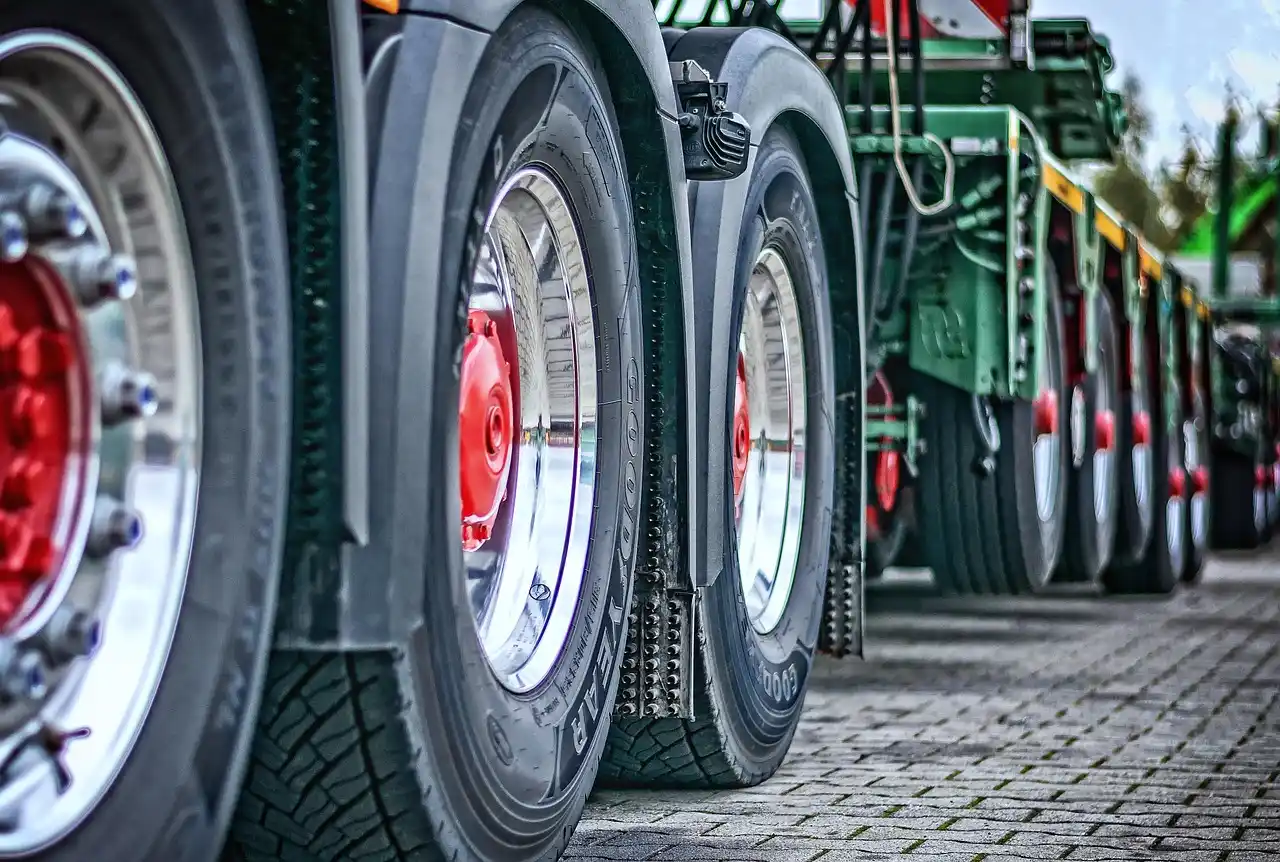
Sideswipe crashes often track with lane changes, improper lane changes, and failure to remain in lane. That fits the physics of no-zones: two vehicles overlap in space when one driver cannot fully see the other or cannot react fast enough to the other’s move.
Lane changes and trailer pacing
When a car paces a trailer, the truck driver may have only a partial mirror view. If the car drifts, the truck changes lanes, or another driver squeezes in, the space disappears fast. That is why a car beside a trailer is more than a visibility issue, it is a lane-control issue.
Wide right turns and right-side passes
Trucks swing left before turning right. The rear wheels track inside the front wheels, so the truck needs room to complete the turn. Passing on the right during a turn is high risk because the truck can move into the very space a passenger car expects to use.
If you see a semi slow for a right turn, do not try to sneak through on the right. Hold back and let the truck complete the turn before you move.
Stopping distance and cut-off risk
A loaded truck needs far more distance to stop than a passenger car. That long stop distance is why a quick merge can be dangerous even when the truck driver sees you early. The truck may not be able to slow in time if you enter too closely or brake suddenly in front of it.
The safer habit is simple: leave space, keep your lane until you have a clean opening, and avoid the urge to “beat” the truck into a gap.
Frequently asked questions
Can a truck driver see my car if I’m beside the trailer?
Sometimes, but not reliably. A car beside the trailer may sit in a blind area, especially on the right side. Even if the driver can catch a glimpse in the mirror, the truck may not have enough time or space to react. The safe move is to pass steadily and avoid pacing the trailer.
How do I know if I’m in a truck’s no-zone?
Use the mirror check first: if you cannot see the truck driver’s face in the mirror, assume you are in danger. Then use the position check. If you are beside the cab, beside the trailer, directly behind it, or too close in front after a merge, you are likely in or near a no-zone.
Which side of a semi truck has the biggest blind spot?
The right side usually has the biggest blind spot. It can extend across three lanes of traffic, and it becomes more difficult to judge when the truck is moving or turning. The left side still has blind area, but the right side is the one that demands the most caution.
Can a truck driver see you if you’re behind them?
The trailer blocks direct rear view, so the driver relies on side mirrors to check behind the truck. That means a car following too closely can sit in a poor visibility zone. The safer answer at road speed is to leave much more room when traffic allows.
How far in front of a truck is it unsafe to merge?
Any merge that cuts off the truck’s stopping room is unsafe. A loaded truck needs much more distance to stop than a passenger car. The practical rule is to merge only when you can see a clear gap ahead and keep moving without forcing the truck to brake hard.
What should I do when I’m driving next to a semi truck?
Do not stay beside it longer than needed. Pass with purpose, avoid lingering next to the trailer, and keep a steady line. If traffic traps you there, back off if you can, or hold position until you can move into a clear lane. The goal is to get out of the no-zone quickly.
