
Roundabouts vs Traffic Lights: Which Is Safer?
Roundabouts are usually safer for drivers because they slow traffic and shrink conflict points. FHWA cites an 82% reduction in fatal and injury crashes when two-way stop control is converted to a roundabout, and a 78% reduction when a signalized intersection is converted. Traffic lights still fit some sites better, especially where pedestrian control, truck turning room, or emergency priority matters. (DOT)
| Decision factor | Roundabouts | traffic lights | Winner |
|---|---|---|---|
| Severe crash reduction | Lower speeds and fewer conflict points reduce the most severe crashes, especially right-angle, left-turn, and head-on events. | Signals separate movements, but right-angle and left-turn crash exposure remains when drivers run red lights or misjudge gaps. | Roundabouts |
| Pedestrian crossing setup | Pedestrians cross one direction at a time, and roundabouts are often described as having shorter crossing distances and set-back crosswalks from moving traffic. | Signals can give a clear walk phase, but crossing distances are often longer and pedestrians face faster turning traffic during permissive phases. | Roundabouts |
| Traffic operations | Continuous yield control can reduce stopping and queuing when flows are balanced. | Signals can often manage heavy imbalance, coordinated corridors, and special phases for buses, trucks, or pedestrians. | traffic lights |
| Site flexibility | Works best when geometry allows slower entries and lower approach speed targets. | Works better where right-of-way is tight, turn volumes are complex, or signal timing can manage many movements. | traffic lights |
Severe crash reduction
Roundabouts win this factor because they change the crash pattern, not just the traffic flow. A modern roundabout uses counterclockwise flow and entry-yield control, so entering traffic yields to circulating traffic and must slow before conflict. That lowers the chance of the high-energy crashes that dominate signalized intersections.
Traffic lights still organize traffic well, but they leave drivers exposed to right-angle crashes and left-turn conflicts when a phase is missed, blocked, or ignored. Signals also depend on power and timing plans. Roundabouts remove the red-light decision at the center of the intersection.
Pedestrian crossing setup
Roundabouts usually give pedestrians a shorter and simpler crossing. IIHS says people cross only one direction of traffic at a time, and crossing distances are relatively short. FHWA also notes that lower vehicular speeds and reduced conflicts make roundabouts more suitable for walking and bicycling.
Traffic lights can still protect pedestrians well when the crossing is short, well timed, and obeyed. The problem is that a signal does not remove turning conflicts; it separates them by phase. That helps in many city streets, but it can still leave pedestrians facing faster turning traffic than a roundabout with well-set back crossings.
Traffic flow and queuing
traffic lights usually win when the main goal is managing platoons, heavy directional imbalance, or corridor coordination. They can hold one movement back while clearing another, which is useful on school corridors, downtown grids, and routes with many closely spaced intersections.
Roundabouts often cut delay and idling when flows are more balanced. They can also replace stop control and some signalized intersections while improving traffic flow. That said, flow is not the only goal. A design that moves more cars through a queue is not automatically the safer choice for people walking or for locations with many turn conflicts.
Are roundabouts safer than traffic lights?
For drivers, usually yes at the kinds of sites where a roundabout fits the geometry. Roundabouts reduce crash severity by forcing lower speeds and cutting conflict points, while signalized intersections still expose drivers to right-angle and left-turn crashes. The safer choice changes when pedestrian control, truck operations, or emergency access dominate.
What changes when speed and conflict points drop
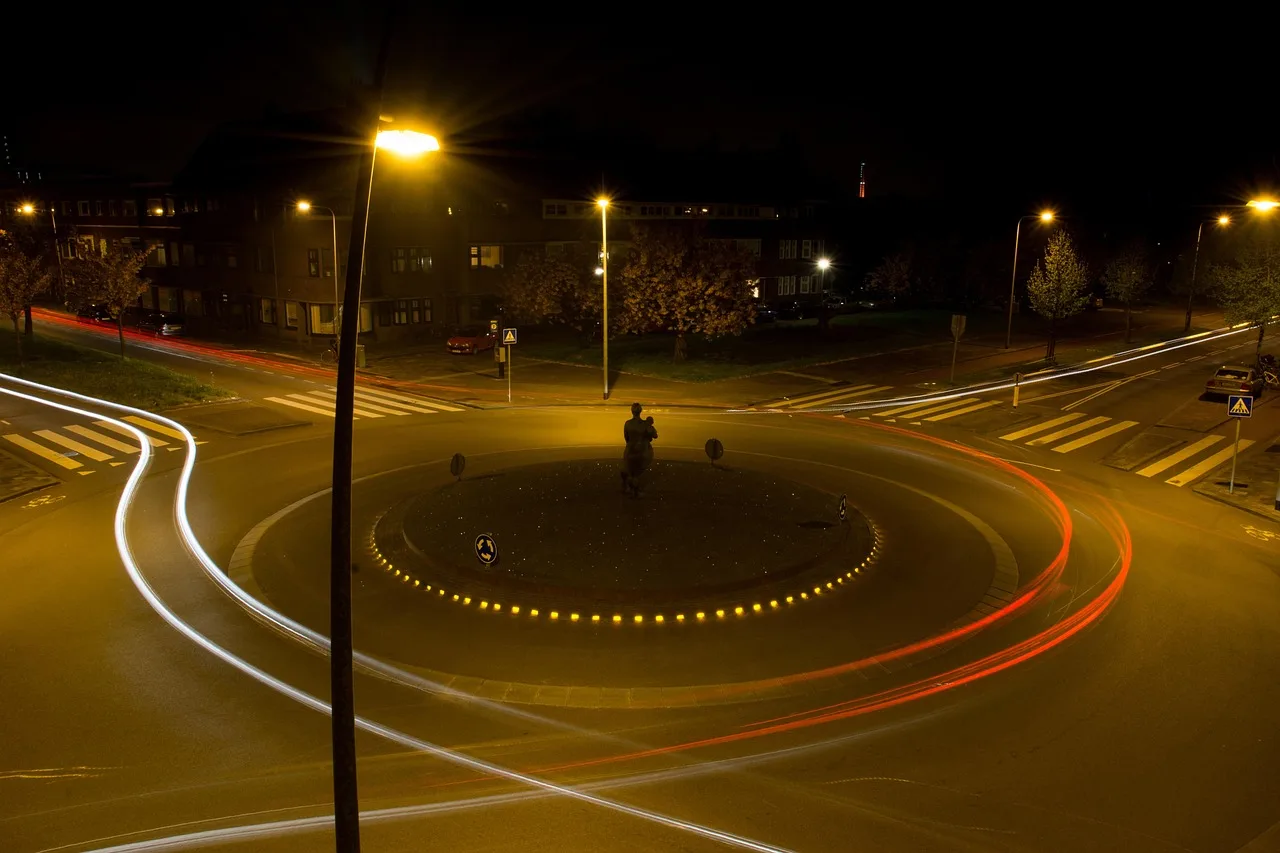
A modern roundabout is a circular intersection design with a central island, counterclockwise flow, and an entry-yield rule. Entering traffic yields to circulating traffic, so drivers slow before the conflict area instead of accelerating into it. That design lowers approach speed and cuts the number of conflict points.
Why crash severity matters more than crash count
Crash count alone can mislead. A low-speed bumper contact is not the same as a right-angle impact at speed. Roundabouts are safer because they push crashes toward lower-energy side-swipe and low-speed entry events rather than the severe crash types common at signalized intersections.
Roundabout comparison table
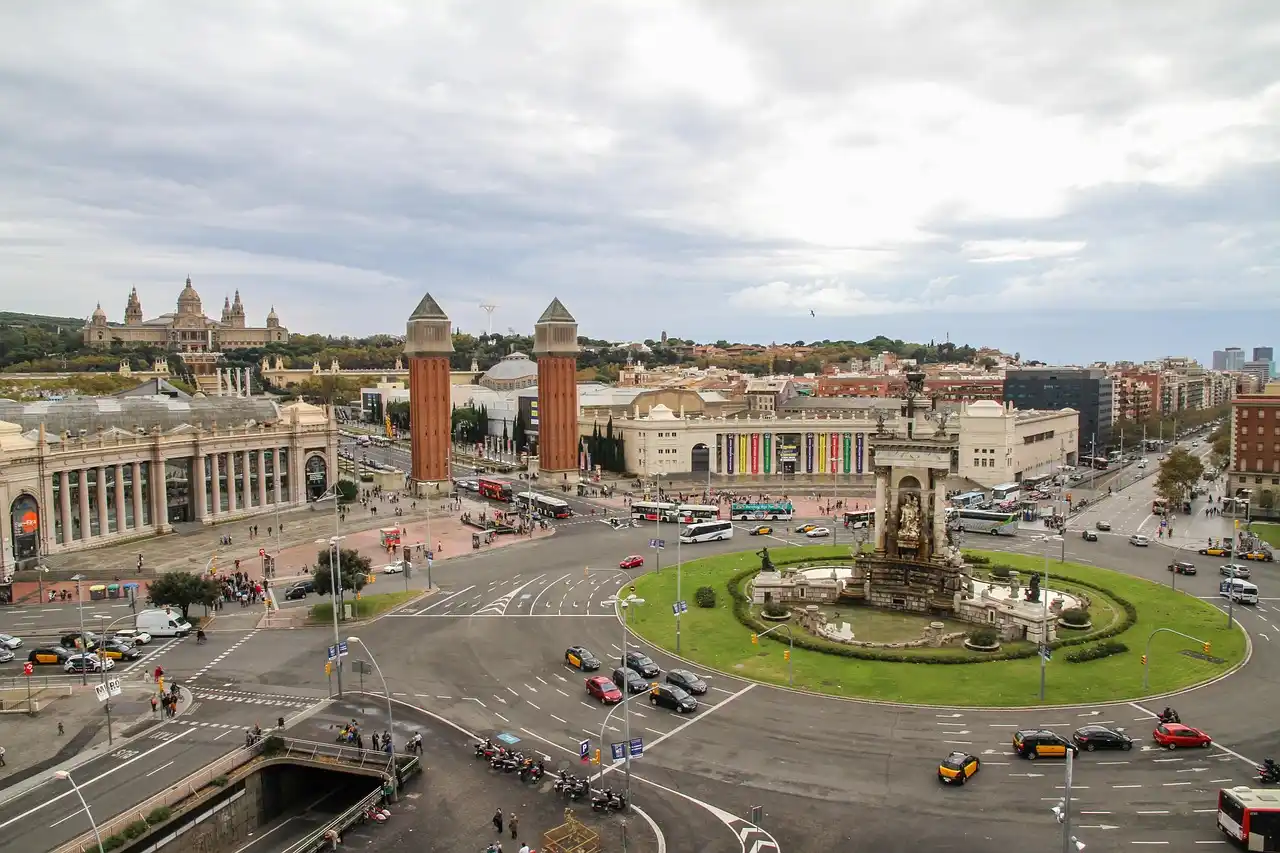
Modern roundabouts are much smaller than older traffic circles, also known as rotaries, and that difference matters. Older circles often allow faster, less structured movement. Modern designs use entry-yield control and a tighter geometry to keep speeds down.
| Scenario | Likely crash type | Expected speed | Vulnerable road user risk | Better safety fit |
|---|---|---|---|---|
| Urban low-speed streets | Low-speed entry and side-swipe conflicts | About 15-20 mph | Lower, if crossings are set back and single-direction | Roundabouts |
| Rural high-speed roads | Run-in, entry, and angle crashes if speeds stay high | About 30-35 mph | Moderate to high near wide approaches | Roundabouts |
| School/pedestrian corridors | Turning conflicts and crossing conflicts | Lower at signals when timed, lower in roundabouts by geometry | High unless crossings are tightly controlled | traffic lights |
| Truck-heavy corridors | Off-tracking, lane encroachment, exit conflicts | Varies with apron and lane width | Higher near wide, multilane entries | traffic lights |
| Multilane intersections | Exiting conflicts and weaving conflicts | Often higher than single-lane roundabouts | Higher for people walking and biking | traffic lights |
| Balanced traffic | Lower-speed entry and merge conflicts | Moderate | Lower than at signalized right-angle exposure | Roundabouts |
| Unbalanced traffic | Queue spillback or forced gaps | Can stay efficient on the dominant approach | Depends on crossing design | traffic lights |
| Emergency-response routes | Delay from yielding if volumes are heavy | Variable | Low, but access timing matters | traffic lights |
Why roundabouts usually cut severe crashes
Roundabouts reduce the most severe intersection crashes: right-angle, left-turn, and head-on collisions. FHWA says roundabouts minimize conflict points with counterclockwise flow, and it cites substantial reductions in injury or fatality crashes. That is why two-way stop-control locations are common conversion candidates.
Say your local two-way stop has one fast cross street and one side road with poor sight distance. A roundabout can lower the entry speed to about 15-20 mph in urban settings, which changes a severe angle crash into a much lower-energy conflict.
Entry-yield control and lower approach speed
The entry-yield rule is central. Entering drivers yield to traffic already in the circle, which assigns right-of-way before the conflict point and forces speed reduction. That smaller speed difference is a big part of the safety gain.
Fewer conflict points than signal phases
Signals depend on phases, but drivers still face multiple decision points: stopping, starting, turning, and clearing the intersection on green. Roundabouts reduce the number of direct crossing conflicts. Fewer conflict points means fewer ways for a crash to become severe.
Why right-angle and head-on crashes drop
At a signalized intersection, the most dangerous mistakes are often red-light running and misread left turns. At a roundabout, vehicles move in the same direction around the central island. That geometry makes a head-on or right-angle impact much less likely.
Are roundabouts safer for pedestrians and cyclists?
Often yes, but only when the geometry is right. Roundabouts generally are safer for pedestrians than traditional intersections because pedestrians cross one direction of traffic at a time, the crossing distance is shorter, and the crossing is usually set back from the circulating lane.
Crossing one direction at a time
That setup reduces decision load. A pedestrian only has to watch for one traffic stream at a time instead of scanning a full intersection. Lower vehicle speeds near the crossing help too, because the driver and pedestrian both have more time to react.
Set-back crosswalks and shorter crossings
Set-back crossings move the person a little away from the circulating lane. That keeps the crossing shorter and gives drivers more room to slow before the pedestrian path. It also helps separate the crosswalk from the tightest part of the roundabout.
Where multilane roundabouts can raise risk
Multilane roundabouts can create exiting conflicts and lane-choice problems, especially for bicyclists and pedestrians crossing more than one lane. In those sites, a signal may be safer if it provides a clear walk phase, better refuge design, or dedicated bicycle handling.
When traffic lights are the safer fit
Traffic lights are often the better safety fit where people walking dominate the site, where trucks need larger turning paths, or where emergency priority matters. They can also work better where the traffic pattern is heavily one-sided or where a roundabout would need too much space.
A common first-timer mistake is assuming the intersection with fewer car crashes is automatically best for everyone. A school corridor with many children crossing at arrival and dismissal times may need the stronger pedestrian control of a signal, even if a roundabout would lower vehicle crash severity.
School and pedestrian corridors
Signals can provide a protected walk phase, curb ramp alignment, and more predictable stopping behavior. That matters on school routes, transit stops, and corridors with frequent crossing demand. Roundabouts can work in these areas, but only if the pedestrian treatment is carefully designed.
Truck-heavy and multilane corridors
Large trucks can fit roundabouts, but the fit depends on geometry. Wide entries, longer vehicle paths, and multilane exits raise complexity. If the corridor already carries heavy trucks and many turning movements, a signal may control those movements more cleanly.
Emergency-response routes and signal priority
Signals can be coordinated or given priority in ways roundabouts cannot match as easily. On emergency-response routes, predictable stop-and-go control may be more useful than a circular layout that depends on yielding and available gaps.
Do roundabouts work better in cities or rural areas?
They can work in both, but the geometry changes. Urban roundabouts are usually designed for lower speeds and shorter footprints, while rural roundabouts often allow larger approach geometry and higher entry speed targets. The best fit depends on roadway speed, right-of-way, and traffic balance.
Urban speed targets and smaller footprints
In urban settings, entering vehicles may be slowed to about 15-20 mph. That lower target fits dense streets and helps protect pedestrians, provided the crosswalks are set back and visible. Smaller roundabouts also fit tighter city parcels.
Rural approach speeds and larger geometry
In rural settings, entering vehicles may be held to 30-35 mph. That can still reduce severity compared with a high-speed stop-controlled crossing, but the design has to handle longer sight lines and faster approach behavior. Geometry drives the target speed, not the other way around.
Balanced traffic versus unbalanced traffic
Roundabouts tend to work best when entering volumes are fairly balanced. When one approach dominates, signals may handle queue timing more efficiently and keep delay from spilling onto side streets. That is especially true where peak-hour direction changes sharply.
Choose Roundabouts if… / Choose traffic lights if…
Use the site, not the slogan. Both controls can be safe when matched to the street they manage.
Choose Roundabouts if…
- You want to cut severe crashes at a two-way stop-control location or a signalized intersection with a history of right-angle or left-turn collisions.
- The site can support lower approach speeds, shorter crossing paths, and a clear entry-yield rule.
- Traffic is fairly balanced, and you want a design that can reduce stopping and queuing.
- The corridor has room for a modern roundabout rather than an older traffic circle or rotary.
Choose traffic lights if…
- The corridor is a school zone or pedestrian-heavy street where a protected walk phase matters most.
- The roadway carries many trucks, wide turning vehicles, or heavy multilane conflicts.
- Traffic is highly unbalanced, or coordinated signal timing is needed along a corridor.
- Emergency-response priority or signal coordination is the main operational need.
FHWA’s conversion data point in the same direction: roundabouts can improve safety when they replace stop control or some signalized intersections. But the best fit depends on who the intersection protects most. Drivers, pedestrians, bicyclists, and freight do not face the same risk pattern.
Frequently asked questions
Why are roundabouts considered safer than signalized intersections?
They change the crash geometry. A modern roundabout uses counterclockwise flow and entry-yield control, so drivers slow before entering and face fewer conflict points. That lowers the chance of the most severe crash types, including right-angle, left-turn, and head-on collisions.
Do roundabouts reduce fatal and injury crashes?
Yes. The same source says roundabouts reduce injury or fatality crashes substantially, and it cites an 82% reduction in fatal and injury crashes when two-way stop control is converted to a roundabout. The exact result depends on site geometry, traffic mix, and whether the roundabout is single-lane or multilane.
Are roundabouts safer for pedestrians than traffic lights?
Often, but not always. The same source says pedestrians cross only one direction of traffic at a time and have relatively short crossing distances at roundabouts. That helps at many sites, yet multilane roundabouts can raise risk if the crossing design is poor or visibility is limited.
What kinds of crashes are most common at traffic lights?
Right-angle collisions and left-turn conflicts are the big ones. Signalized intersections also still face rear-end crashes from stop-and-go operation and red-light running. The signal can reduce conflict by phase timing, but it does not remove those crash types the way a roundabout does.
How fast do you drive in a roundabout?
Design speed depends on geometry, but a common target is about 15-20 mph in urban settings and about 30-35 mph in rural settings. The point is not to keep a fixed speed all the way through. It is to slow enough at entry so the yield rule works safely.
