What Are the Key Defensive Driving Skills and Techniques?
Defensive driving means scanning well ahead, predicting what nearby drivers, walkers, and cyclists may do, keeping at least a 3-second following gap, signaling early, and leaving yourself an escape route. Miss one habit, and small traffic mistakes can become rear-end crashes, side-swipes, or panic stops. This guide breaks the system into scan, predict, space, signal, and choose, with repeatable techniques you can use and teach.
What defensive driving skills matter most?
The most useful defensive driving skills come in order: scan ahead, predict the next move, leave space, signal clearly, and keep an exit path open. Those are observation skills first, then action skills. When traffic gets messy, you need a sequence, not a loose list of reminders.
Scan ahead before you react
Scan far enough ahead to spot trouble before it becomes a surprise. That means watching the road, the shoulders, and the vehicles several seconds in front of you, while still checking mirrors and the car directly around you.
Predict likely hazards
Look for pedestrians, cyclists, debris, children, animals, intersections, hidden driveways, and vehicles that drift, brake late, or move without warning. Also assume another driver may be distracted, drowsy, or impaired. That prediction step changes what you do next.
Leave space to act
Space is your reaction buffer. A standard baseline is the three-second rule for normal conditions, and the gap should grow in rain, snow, fog, low visibility, heavy traffic, or around larger vehicles.
Signal intent early
Use turn signals before turns and lane changes so surrounding drivers can read your plan. Use headlights, horn, or hand signals only when they are appropriate and legal for the situation. Communication lowers the chance of a late brake or blind-side move.
- Scan first. Look 12 to 15 seconds ahead so you see slowing traffic, cross traffic, and lane changes before they become immediate threats. In city driving, that is usually one to two blocks ahead; on highways, about a quarter mile.
- Predict the hazard. Ask what the traffic pattern will do next. A car near a shopping center exit may brake for a pedestrian, while a vehicle near a merge may drift if the lane closes.
- Create space. Match speed to the road, traffic, weather, and vehicle load, then keep a safe buffer in front and around the vehicle. If the road gets uncertain, space matters more than holding the exact speed limit.
- Signal before moving. Turn signals should come on early enough that nearby drivers can react. If a signal cannot communicate the move clearly, slow down and wait for a better opening.
- Keep an escape route. Leave one lane, shoulder, or stopping zone available when possible so you are not boxed in by a truck, a tailgater, or a blind merge.
A common first-timer mistake is treating defensive driving like a single habit. It is really a sequence. If you scan, predict, space, signal, and choose an escape route in that order, you can handle several hazards at once without freezing.
How far ahead should you scan?
When driving defensively, scan 12 to 15 seconds ahead. In city driving, that usually means one to two blocks; on highways, about a quarter mile. That distance gives you time to spot changes, sort out the biggest risk, and pick a response before the road narrows your choices.
City streets and intersections
On city streets, your scan should reach through parked cars, delivery vehicles, crosswalks, and hidden driveways. Intersections need extra attention because turning traffic, pedestrians, and cyclists can appear at the same time. Short scanning habits fail there.
Highways and faster roads
On highways, the 12 to 15 second scan is less about pedestrians and more about lane flow, merges, brake lights, and debris. At speed, a quarter-mile look-ahead gives you more time to adjust speed gradually instead of braking hard.
Hidden driveways and cross traffic
Driveways behind hedges, parked vans, or corner buildings matter because a vehicle can enter your path with very little warning. Scan for openings, wheel movement, and brake-light changes, not only for the car directly in front of you.
Say your route passes a school at 3 p.m. A child runs toward the curb, a delivery van blocks part of the crosswalk, and a driver behind you is still moving fast. A long scan lets you slow early, cover the brake, and keep space without sudden swerves.
How much following distance should you keep?
Keep the three-second rule as the baseline following distance for standard vehicles in normal conditions. Increase that gap in rain, snow, fog, low visibility, heavy traffic, or around larger vehicles. Three seconds is a reaction buffer, not a promise that every stop will fit inside it.
The 3-second rule in normal traffic
Pick a fixed object ahead, such as a sign or lane mark. When the vehicle in front passes it, count three seconds before you reach the same point. If you get there sooner, ease off the accelerator and rebuild space.
When to add more space
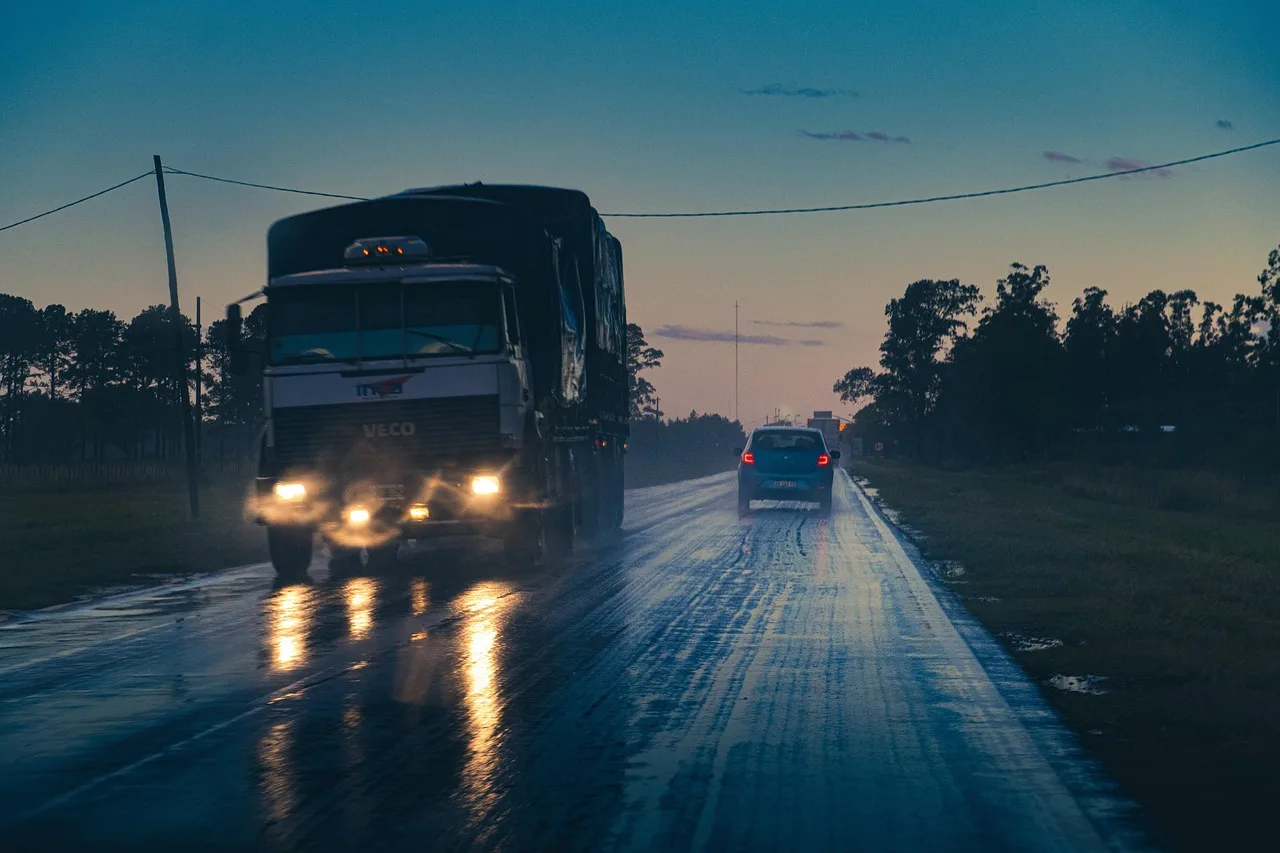
Following distance should increase during adverse weather conditions, and in poor visibility it should rise to five seconds or more. Wet pavement, snow, fog, and night glare all lengthen the time it takes to see, decide, and brake.
Large vehicles and stopping distance
Trucks, buses, and SUVs can block your view and create a false sense of closeness. Do not sit in a large vehicle’s blind spot, and give it extra room because its size changes both stopping behavior and what you can see ahead.
Suppose traffic is moving steadily in light rain. A three-second gap may look normal, but spray, darker pavement, and longer stopping distance call for more room. Increasing that gap to five seconds or more keeps the car from closing in too quickly if the flow stops short.
How do you use mirrors and blind spots defensively?
Check mirrors often, then confirm blind spots with a head check before changing lanes. Mirror checks are commonly advised every 3 to 8 seconds depending on the source, and some guidance calls for every three to five seconds before and after lane changes. Mirrors show traffic; head checks confirm the space beside you.
Mirror check timing
Use mirrors as part of a regular scan, not only when changing lanes. Frequent mirror checks help you notice closing traffic, tailgaters, motorcycles, and vehicles moving into an adjacent lane before the situation tightens.
Head checks before lane changes
A mirror cannot see everything. Before you move over, glance over your shoulder to confirm the blind spot is clear, then complete the lane change only if the space remains open. That quick check matters even more in dense traffic.
Truck and SUV blind spots
Avoid staying beside trucks and SUVs for long periods, especially near the rear quarter and along the front side where visibility drops off. If you cannot pass safely, drop back or move ahead decisively when the opening is clear.
- Check the mirror pattern. Look ahead, then side mirrors, then the rearview mirror on a steady cycle. Use a rhythm of every few seconds so you do not lose track of traffic building behind or beside you.
- Confirm the blind spot. Turn your head briefly before changing lanes or merging. That final check catches motorcycles, small cars, and vehicles sitting in the space mirrors miss.
- Commit to one move. If the gap closes or a driver speeds up, cancel the lane change and wait. Half-moves create sideswipe risk.
Defensive driving decision matrix
This matrix turns the sequence into a quick choice guide. Start with the biggest hazard, then look for the cue, then create enough space to act. If the situation changes, move down the list again from the top.
| Driving scene | Primary hazard | Best scanning cue | Minimum space rule | Safe action | Common mistake |
|---|---|---|---|---|---|
| Freeway | Fast merges, brake waves, debris | Quarter-mile look-ahead and mirror sweep every few seconds | Three-second baseline, more near large vehicles or in dense flow | Match speed smoothly, keep an escape lane, and avoid hanging in blind spots | Fixating on the car ahead and missing the lane change developing behind you |
| City intersection | Cross traffic, pedestrians, cyclists, turning cars | One to two blocks ahead and both sidewalks near the corner | Enough room to stop without rolling into the crosswalk | Slow early, cover the brake, and scan left-right-left before entering | Looking only at the signal and not at the people or vehicles near the curb |
| Rain/night | Longer stopping distance, glare, reduced visibility, hydroplaning risk | Lane markings, taillights, splash patterns, and reflective signs | Five seconds or more when visibility is poor | Reduce speed, use headlights appropriately, and avoid abrupt steering or braking | Keeping daytime speed because the limit has not changed |
| Aggressive-driver encounter | Tailgating, weaving, brake-checking, rapid lane changes | Rapid closing speed, repeated lane hopping, and flashing or crowding | Extra space in front and to the side whenever possible | Stay calm, do not engage, and let the driver go by | Braking hard to “teach a lesson” or matching the driver’s speed changes |
How do you handle weather and aggressive drivers?
In rain, snow, fog, and night driving, reduce speed, increase following distance, and use headlights appropriately. With aggressive drivers, give plenty of space and do not engage. Weather changes what the road can do; aggressive behavior changes what other drivers might do next.
Rain, snow, fog, and night driving
Reduce speed when the pavement is wet, slick, or hard to read. If hydroplaning risk rises, ease off the accelerator smoothly rather than braking hard. In low visibility, the target is not the posted limit; it is a speed that still lets you see, decide, and stop in time.
Aggressive-driver response
Keep your lane, hold a steady pace when safe, and open space so the other driver can pass. Do not return gestures, chase the driver, or crowd the vehicle back. Calm driving is a safety choice, not a concession.
Using headlights, horn, and speed changes
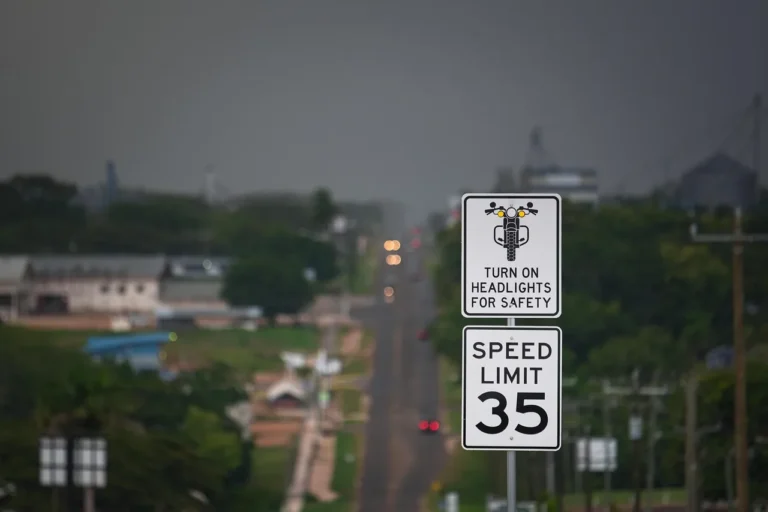
Headlights help you see and be seen in poor light or bad weather. Horn use should be brief and necessary, not retaliatory. A small speed reduction often creates more safety than a hard brake because it gives everyone behind you more time to react.
Picture a driver tailgating on a wet road at dusk. The safer move is not to speed up or brake-check. It is to keep a larger gap ahead, signal early if you need to change lanes, and let the aggressive driver move on.
How do you practice defensive driving every day?
Practice defensive driving by repeating the same order on every trip: scan, predict, space, signal, and choose an escape route. Daily driving gets safer when the habits become automatic, especially at intersections, merges, school zones, and in weather that reduces traction or visibility.
- Start with a scan. Look 12 to 15 seconds ahead before every major traffic decision. That early look lets you see a red light, lane closure, or pedestrian before it forces a sudden move.
- Set the gap. Keep the three-second rule in normal conditions, then add more space when rain, fog, snow, heavy traffic, or a larger vehicle changes the risk. Space should grow before the road gets crowded.
- Check mirrors on rhythm. Build a mirror habit every few seconds so you always know who is closing from behind or beside you. Pair that with a head check before any lane change.
- Communicate early. Signal well before turning or merging. If another driver cannot read your intent, they may fill the space you planned to use.
- Keep an exit path. Pick an open lane, shoulder, or stopping zone whenever traffic allows. If the flow becomes uncertain, do not box yourself in between vehicles.
How to teach defensive driving to a teen
Teach a teen driver the same sequence, but make each piece concrete and small. New drivers usually need help turning general advice into a repeatable habit: look far ahead, name the hazard, keep space, signal early, and pick a backup path before moving.
First-month driving translation
In the first months behind the wheel, a teen driver should focus on one job at a time. That means calling out hazards, checking mirrors on a simple rhythm, and making lane changes only when the head check confirms the blind spot is clear.
What to coach in real traffic
Give short prompts at intersections and merges: “look ahead,” “who may move,” “space,” and “signal.” Keep corrections tied to one mistake, such as following too closely or forgetting the blind spot check, so the driver can connect the cue with the action.
Say your teen is exiting a neighborhood and approaching a two-lane road. A parked pickup blocks part of the view, a cyclist is near the curb, and a car is coming fast from the left. The right lesson is to slow early, scan farther out, and wait for a clear gap instead of trying to fit the move into a shrinking space.
Frequently asked questions
What are defensive driving techniques?
Defensive driving techniques are the habits that help you spot risk early and respond before it becomes a crash. The core sequence is scan, predict, space, signal, and choose an escape route. Each part does a different job, so the skill is easier to train than a vague “be careful” warning.
How do you practice defensive driving every day: practice by repeating the same?
Practice by repeating the same routine on every trip: scan 12 to 15 seconds ahead, keep the three-second baseline in normal traffic, check mirrors often, signal early, and leave room to steer or stop. The goal is consistency, not perfection.
How far ahead should you scan when driving defensively?
Scan 12 to 15 seconds ahead. In city driving, that is usually one to two blocks; on highways, about a quarter mile. That distance gives you enough time to notice a hazard, sort out the best response, and avoid a last-second reaction.
How much following distance should you keep in defensive driving?
Use the three-second rule as the baseline for standard vehicles in normal conditions. Add more space in rain, snow, fog, low visibility, heavy traffic, and around larger vehicles. In poor visibility, five seconds or more is a better target.
How do you spot aggressive drivers before they cause trouble?
Look for rapid closing speed, tailgating, repeated lane changes, brake-checking, and a refusal to hold a lane. Those behaviors show up early. Your response should be calm spacing, no engagement, and a steady effort to let the driver pass.
How do you keep an escape route while driving in traffic?
Keep at least one open lane, shoulder, or stopping zone in mind whenever traffic allows. Avoid sitting boxed in beside a truck, between two closing vehicles, or directly behind a driver whose behavior looks uncertain. Space is the route out.
How do you use mirrors and blind spots defensively: check mirrors every few seconds?
Check mirrors every few seconds so you know what is building behind and beside you. Before a lane change, add a head check to clear the blind spot, then move only if the space stays open. Avoid lingering near truck and SUV blind spots.
How to teach defensive driving to a teen: teach it as a repeatable
Teach it as a repeatable sequence, not a lecture. Have the teen name the hazard, scan farther ahead, keep the three-second gap, signal early, and identify an escape route before each turn or merge. Short coaching cues work better than long speeches.