Why Can’t I See Well When Driving at Night?
If you can see poorly at night, the pattern matters: blur often points to an outdated prescription or astigmatism, glare and halos often point to cataracts or dry eye, and true dim-light loss can signal a retinal or optic nerve problem. Ignoring it can make lane markings, pedestrians, and oncoming headlights harder to judge, which raises crash risk fast. This guide explains each symptom pattern, the most likely causes, and when you need an eye exam right away.
What blur, glare, and halos can mean
Night driving uses mesopic vision, the mixed bright-and-dim visual mode used for night driving, and that mode weakens with age. If your problem is blur, glare, halos, or loss of detail in dim light, the likely cause changes. That is why the symptom pattern matters more than a plain daylight eye chart.
Blur points to focus problems
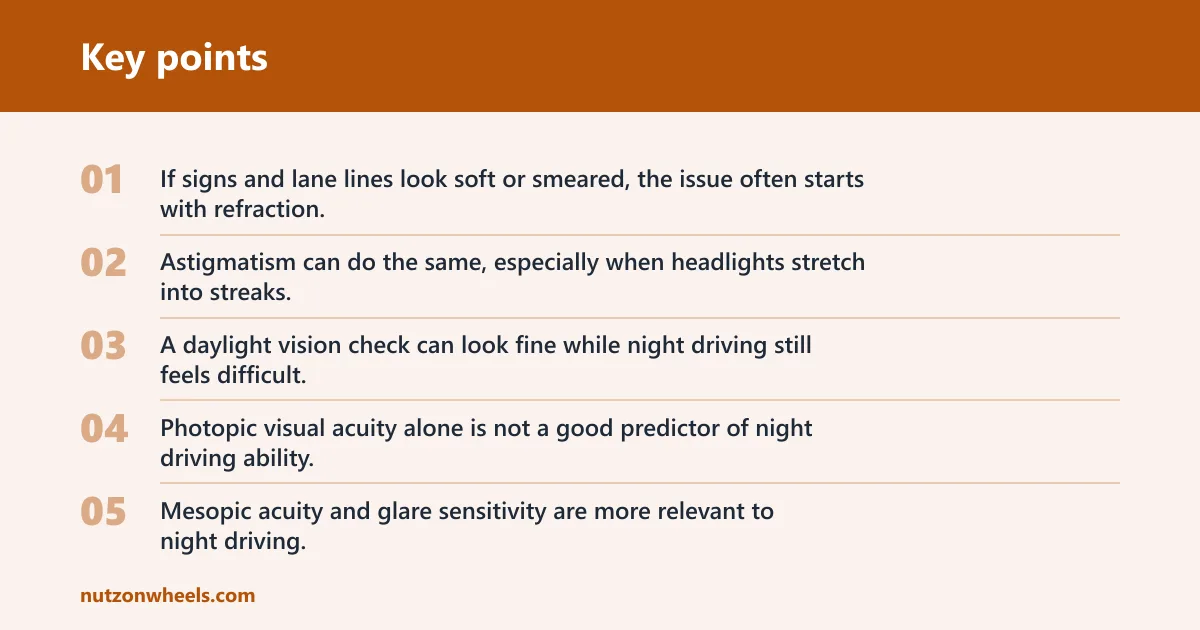
If signs and lane lines look soft or smeared, the issue often starts with refraction. Nearsightedness can make night driving hard because of glare and halos, and an updated prescription may relieve those symptoms for people who are nearsighted. Astigmatism can do the same, especially when headlights stretch into streaks.
A daylight vision check can look fine while night driving still feels difficult. Photopic visual acuity alone is not a good predictor of night driving ability. Mesopic acuity and glare sensitivity are more relevant to night driving.
Glare and halos point to light scatter
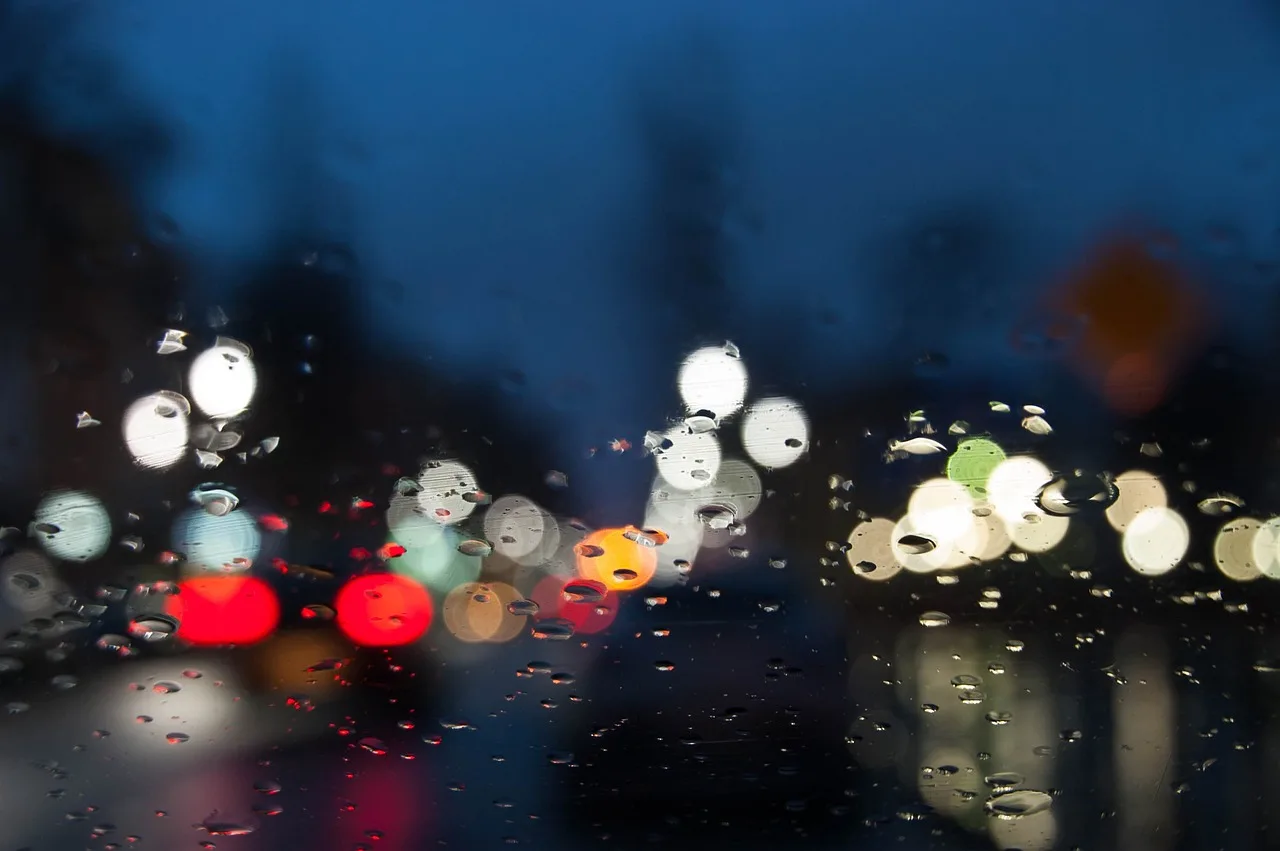
Headlights and streetlights can scatter inside the eye and wash out detail. Glare sensitivity also increases with age, and it often becomes obvious first on dark roads with bright oncoming traffic. Cataracts are a common cause of this light scatter, and they may create halos around lights as well as sensitivity to glare.
Dry eye can add a second problem by making lights look fuzzy or streaked, especially after long, unbroken driving. That does not mean every glare complaint is dry eye, but it is one reason the same road can feel much harder at 10 p.m. than at dusk.
True dim-light loss is different
If you can read signs in daylight but struggle only once the sky gets dark, that points toward night blindness, or nyctalopia. Night blindness is difficulty seeing in dim light, not total blindness. It needs clinical evaluation to find the cause, because the cause can be treatable or needs monitoring.
Retinal disease, optic nerve disease, and medication effects can all reduce dim-light function. Glaucoma can lead to poor night vision over time. Vitamin A deficiency can also cause night blindness, but supplementing should wait until a clinician confirms the cause.
Night vision triage table
This table helps you sort the symptom pattern before your exam. It does not replace evaluation, but it can help you describe the problem clearly and ask for the right testing.
| What the driver notices | Most likely mechanism | Common causes | What to ask an eye doctor |
|---|---|---|---|
| Glare halos around headlights or streetlights | Light scatter inside the eye | Cataracts, dry eye, nearsightedness, outdated prescription | “Could cataracts or refractive error be causing the halos?” |
| Washed-out road signs | Contrast loss | Mesopic vision decline, cataracts, glaucoma, retinal disease | “Can you check contrast sensitivity and night-driving vision?” |
| Trouble after oncoming headlights | Glare recovery problem | Age-related glare sensitivity, cataracts, dry eye, uncorrected astigmatism | “Is my glare sensitivity or lens clarity affecting recovery?” |
| Trouble seeing only in the dark | Low-light rod or retinal function problem | Nyctalopia, vitamin A deficiency, retinal disease, glaucoma, medication effects | “Do I need testing for night blindness or retinal disease?” |
What an eye exam should check
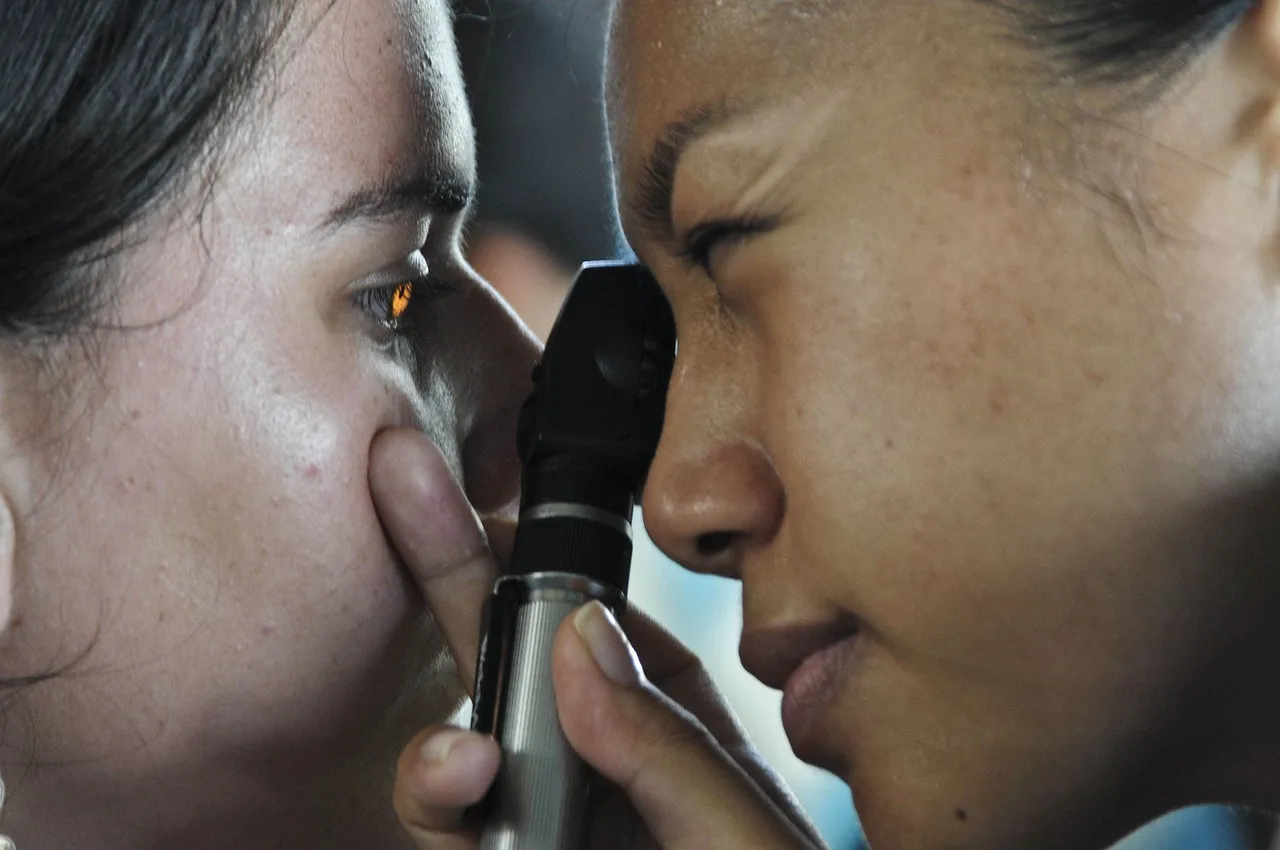
A full eye exam should go beyond the standard eye chart and include low-light vision checks when night driving is the complaint. Mesopic acuity matters more for night driving than daylight acuity alone, and contrast testing can show problems the Snellen chart misses. Refraction should also be checked so an outdated prescription or astigmatism is not mistaken for something deeper.
Ask for the right measurements
Tell the eye doctor exactly what happens on the road: blur, glare, halos, washed-out signs, or trouble after headlights pass. That history guides whether the exam should focus on mesopic acuity, contrast testing, refraction, or signs of cataracts. The goal is to match the test to the symptom.
- Describe the symptom pattern. Say whether the problem is blur, glare, halos, washed-out detail, or true dim-light loss. That distinction changes which causes rise to the top.
- Ask for refraction review. A new glasses prescription can reduce blur, glare, and halos when the old one is no longer accurate. This matters most if you are nearsighted or have astigmatism.
- Request contrast and low-light testing. Standard daylight acuity may miss night-driving trouble. Contrast testing and mesopic acuity better reflect how you see road signs, lane lines, and headlights at night.
- Look for cataract signs. Cataracts can cause poor nighttime vision, halos around lights, and glare sensitivity. If cataracts are the issue, surgery may improve night vision.
A prescription change of about 0.50 diopter may be small, but a bright halo around every headlight can still be the real complaint. That points more toward lens scatter or surface dryness than a simple focusing error. Now compare that with a driver who cannot read a sign until the car is almost on top of it; contrast loss becomes more likely.
Which fixes help which problem?
The right fix depends on the failure mode. Anti-reflective lens coating can reduce glare from headlights and streetlights, but it does not restore dim-road visibility. Updated glasses help blur from refractive error, while cataract treatment helps when the lens itself is scattering light.
Match the fix to the symptom
If the symptom is glare, coating may help. If the symptom is blur, the prescription may be wrong. If the symptom is true low-light loss, the issue may sit in the retina, optic nerve, or a medication effect, and glasses alone will not solve it.
- Try anti-reflective coating. If you wear glasses, ask for an antireflective lens coating. It can reduce glare from headlights and streetlights, which may make night driving easier.
- Update the prescription. If your refraction is outdated, a new prescription may relieve blur, halos, and some glare for people who are nearsighted. This helps when the main problem is focus, not low-light function.
- Discuss cataract treatment. Cataracts can cause poor nighttime vision, halos, and glare sensitivity. If they are the main cause, surgery may improve vision more than lens changes can.
- Review medications. Some glaucoma drops, diuretics, antihistamines, antidepressants, beta-blockers, and birth control pills have been linked to night blindness. Do not stop them on your own; ask whether a change is appropriate.
What about yellow-tinted lenses?
Yellow-tinted lenses are marketed for night glare reduction, but the benefit is unclear. GoodRx says they are not clearly proven for nighttime vision, and it cautions they may worsen vision over time. That makes them a weak choice compared with fixing the prescription or treating the eye condition behind the symptoms.
Is it night blindness?
Night blindness, or nyctalopia, means difficulty seeing in dim light, not total blindness. It is different from ordinary discomfort with headlights, and it deserves clinical evaluation because the cause can range from vitamin A deficiency to retinal disease or medication effects. If the trouble is only glare, the cause may be different.
Vitamin A and medication causes
Vitamin A deficiency can cause night blindness, but a clinician should confirm that before any supplement is started. Too much vitamin A can also cause harm. Medication-related night blindness should be considered when symptoms began after a new prescription or dose change.
Glaucoma drops, diuretics, antihistamines, antidepressants, beta-blockers, and birth control pills are all listed among medications linked to night blindness. That does not prove they are the cause in every case. It does mean the medication list belongs in the eye exam.
When eye disease needs evaluation
Retinal and optic nerve problems can present as dimness, poor contrast, or slow recovery after bright lights. Glaucoma can lead to poor night vision over time. If the symptom pattern is true dim-light loss, an eye doctor should look for a cause rather than assuming it is normal aging.
When to get your eyes checked sooner
Book an eye exam soon if night driving has become worse, especially if the change is new or one-sided. Sudden worsening, pain, redness, or a new medicine can be reasons to get checked sooner. Routine age-related glare still deserves evaluation, but it is less urgent than abrupt or painful change.
Do not wait if these show up
Halos with pain or redness need prompt attention, because that pattern can signal an eye pressure problem or inflammation. New trouble after starting a medicine also deserves review. If one eye is clearly worse than the other, that asymmetry should be checked rather than watched at home.
- Schedule an eye exam. If night driving feels worse over weeks or months, do not rely on a daylight check alone. Ask for mesopic acuity, contrast testing, and a refraction review.
- Bring your medication list. Include drops, pills, and recent dose changes. That helps the clinician spot medicine-related night vision problems.
- Describe red-flag symptoms. Mention pain, redness, one-sided changes, or a sudden jump in glare. Those details change how quickly you should be seen.
Suppose a driver notices washed-out stop signs only after sunset and also sees rings around headlights. That pattern fits glare plus contrast loss, which often points toward cataracts or a prescription problem. If the same driver also says everything is dim in both eyes at night, the exam should look harder for true night blindness causes.
Frequently asked questions
Why can’t I see well when I drive at night?
The most common reasons are blur from an outdated prescription, glare from headlights, halos from cataracts, and contrast loss in low light. Night driving relies on mesopic vision, which decreases with age. A standard daylight eye chart can miss the problem, so a fuller exam is usually needed.
How can I see better when driving at night?
Start with the symptom pattern. If it is blur, update the prescription; if it is glare, ask about antireflective coating and cataracts; if it is dim-light loss, ask for low-light and contrast testing. Yellow-tinted lenses are not clearly proven to help.
Is it night blindness or just normal trouble in the dark?
Ordinary night-driving difficulty usually means the scene looks dimmer and glare is worse. Night blindness, or nyctalopia, means a true inability to see well in dim light and needs clinical evaluation. If the problem is severe, worsening, or present in good road conditions, it should not be written off as normal.
Why are headlights and streetlights so glaring at night?
Glare is often caused by light scattering in the eye, which becomes more noticeable with cataracts, dry eye, nearsightedness, or an outdated prescription. Glare sensitivity also increases with age. Mesopic vision is less able to handle bright lights against a dark background.
What eye conditions make night driving harder
Cataracts, glaucoma, nearsightedness, retinal disease, and dry eye can all make night driving harder. Cataracts are frequent because they can cause poor nighttime vision, halos, and glare sensitivity. Some causes also reduce contrast rather than sharpness, so the eye chart may still look acceptable.
Should I get my eyes checked if night driving suddenly feels worse?
Yes. A sudden change is worth an eye exam soon, especially if it is one-sided, comes with pain or redness, or started after a new medicine. Sudden worsening is less likely to be simple aging and more likely to need timely evaluation.
Do yellow-tinted or anti-reflective lenses help with night driving?
Antireflective coating can reduce glare from headlights and streetlights for people who wear glasses. Yellow-tinted lenses are marketed for night glare, but the benefit is unclear and they may worsen vision over time. They should not be treated as a substitute for diagnosing the cause.