What Is Good Etiquette at Toll Booths and Pay Stations?

Good etiquette means choosing your toll lane early, staying in it, keeping payment ready, and never backing up or cutting across at the last second. Bad lane changes slow traffic, trigger missed tolls, and raise rear-end risk. This guide covers booth, express-lane, cashless-road, and pay-station etiquette, plus what to do when signage changes or your payment method fails.
This guide is part of our Road etiquette: simple rules for safer, calmer driving series.
What good etiquette starts before the booth?
Good etiquette starts before you enter the toll area: read the signs early, match your lane to your payment method, and commit before the merge point. That keeps the queue moving and prevents sudden lane changes that force other drivers to brake or split attention.
- Scan signs early. Look for cash, tag, card, cashless, or pay-on-foot labels before you reach the split. If the lane has a solid white line restriction, treat it as a no-cross zone unless the posted markings appear to allow a merge.
- Match the lane to payment. Use the lane that fits your setup now, not the one that looks fastest. A booth, express lane, and pay station can all have different rules, and the courteous choice is the one that avoids hesitation on the final approach.
- Keep your decision fixed. Once you line up for a lane, stay there. Last-second corrections confuse drivers behind you and can leave you stopped in a spot that blocks the next vehicle from entering cleanly.
Picture a driver approaching a split with a card in hand but a lane marked for transponder use only. The courteous move is to stay out of that lane and choose the correct booth or pay point early, even if that means a slightly longer queue.
Toll booths: how to behave in staffed and automatic lanes
A toll booth is a physical payment point, and courtesy means treating it like a shared queue, not a place to improvise. Staffed booths may take cash, card, or electronic billing, while automatic booths may use a tag, card, or invoice setup. In both cases, keep your lane position stable and leave room for the car ahead to finish.
- Line up cleanly. Enter the correct booth lane with enough space to stop without drifting across striping. Queue discipline matters because the booth area is usually narrow and one wavering vehicle can stall two lines at once.
- Stop only where needed. If the booth requires payment, stop fully and wait your turn. If the lane is automatic and the system collects electronically, keep rolling at the posted pace instead of creeping forward and stopping for no reason.
- Prepare your payment early. Have cash, card, or tag ready before you reach the booth face. Fumbling at the window is the simplest way to hold up everyone behind you.
Some private toll booths require card payment to open a physical barrier. In that setup, the courteous driver stays centered, pays without delay, and pulls forward promptly after the barrier opens instead of pausing to sort receipts or change.
What should you do in express lanes?
Express lanes are managed-access toll lanes, often with electronic tolling and overhead pricing signs. Courteous driving here means you read the price before entering, accept that the toll can change with traffic, and keep your lane choice aligned with the posted access rules. Do not treat an express lane like a regular lane with casual weaving.
How overhead pricing signs and dynamic pricing affect your choice
Overhead signs tell you whether the lane is open, limited access, or priced differently by time and traffic. Alameda CTC says its express lanes are fully electronic, with no booths or gates, and that lane pricing changes throughout the day to keep traffic moving. That means the price is part of the lane choice, not an afterthought.
- Check the posted hours before entry. Alameda CTC lists express lane operating hours as Monday through Friday, 5am-8pm.
- Expect prices to change with demand. Alameda CTC describes dynamic pricing as tolls rising when traffic increases.
- Use only the access points allowed by the markings. Alameda CTC says drivers may enter or exit nearly anywhere except where solid white lines restrict access.
When a transponder is required
On some express lanes, a valid tag is not optional. The same source says drivers on its express lanes need a properly mounted valid FasTrak toll tag, and electronic tolls are collected only during posted express lane hours. Courtesy here means entering only when your vehicle is ready to be recognized without forcing a manual correction later.
- Mount the tag correctly. Put the transponder in the location the toll program requires before you enter. A tag that is loose, hidden, or expired can cause a billing problem that slows your trip later.
- Set the occupancy value. If the lane uses occupancy-based toll discounts, set the switch or occupancy setting before you reach the lane. On systems such as FasTrak Flex, solo drivers set it to 1, while 2 or 3+ may indicate toll-free eligibility where posted rules allow it.
- Stay in the posted access zone. If you miss the correct entrance or exit, do not cut across a solid white line. Continue to the next legal point instead of forcing a merge that disrupts the flow of traffic.
Suppose a carpool lane uses an occupancy setting for eligibility and the driver forgets to switch it before entering. The courteous response is not a sudden lane change. Stay with the lane rules as posted, then correct the setting before the next trip.
How to handle occupancy-based discounts and Flex settings
Occupancy settings are not decoration. In lanes that use them, the setting tells the system whether the vehicle qualifies for a discount or toll-free use. A solo driver should set the device to 1 when that is the correct program setting, while 2 or 3+ may be used where the posted rules allow carpool eligibility.
If the setting is wrong, the safest etiquette is to continue normally and sort out the account later. Do not drift across markings or stop in the lane to fix the switch after you have committed.
Pay stations: courtesy for parking and garage payment
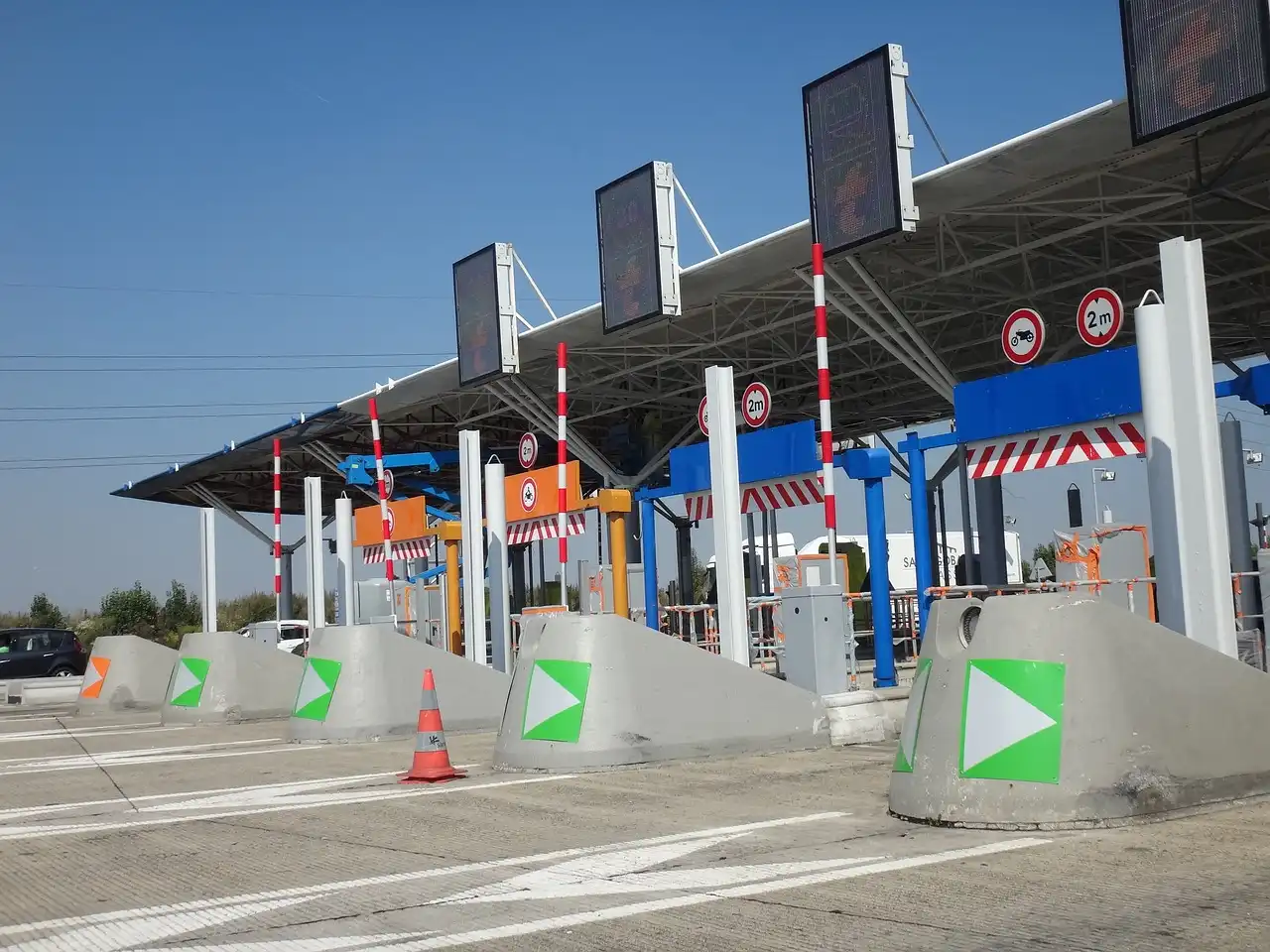
Pay stations are payment kiosks for parking lots and garages, either in-lane or pay-on-foot. Courteous use means you pay without blocking the next car, step aside when the transaction ends, and follow the signage for ticket, card, or app-based payment. Some stations are sheltered by canopies, which helps protect the queue from weather but does not change the lane rules.
How to use a pay-on-foot station without confusing other drivers
Pay-on-foot stations are for walking up to pay after parking, so the courtesy rule is simple: do not linger in the vehicle path after you finish. Little Buildings says pay-on-foot lanes are protected from sunlight and rain by canopies, which can make the kiosk area feel more comfortable; that does not make it a place to stand and sort paperwork.
- Take your payment with you. Bring the ticket, card, or phone credential to the kiosk before you leave the parking space. That keeps the process short and avoids a return trip to the vehicle.
- Pay and clear the space. Complete the payment, keep the receipt if needed, and step away from the kiosk promptly. Other drivers should be able to approach the station without waiting on your last check of the screen.
- Return by the posted route. Walk back using the signed path or crosswalk, not through the moving lane. That keeps pedestrians and vehicles separated at a point where attention is already divided.
In-lane kiosks and how to avoid blocking the next driver
An in-lane kiosk can create a short stop, so the courteous move is to stop once, pay once, and move on. If the lane has a barrier, clear it and exit immediately after payment. If the system is ticket-based, keep the ticket handy so you are not searching at the machine while the next car waits.
Card, app, and ticket setups all tend to work better when the driver already knows which one the facility expects. A lane that accepts an app does not necessarily accept cash, and a ticket lane is not the place to discover that distinction for the first time.
Toll etiquette decision matrix
This table gives a quick answer when the facility, payment setup, or lane type is different from what you expected. The courtesy standard stays the same: decide early, keep your lane, and do not make the next driver wait while you sort out a fix.
| Facility type | Payment setup | Stop? | What courtesy looks like | Most common mistake to avoid |
|---|---|---|---|---|
| Staffed toll booth | Cash, card, or electronic billing | Yes | Choose the correct booth early, stop in the lane, and keep your payment ready. | Cutting across at the last second because a different booth looks shorter. |
| Automatic toll booth | Card or invoice billing | Usually yes, if a barrier is present | Approach centered, pay quickly, and clear the lane as soon as the barrier opens. | Rolling forward slowly while searching for a payment method. |
| Electronic express lane | Valid transponder | No, if posted for free flow | Enter only with the correct tag mounted and the right occupancy setting already selected. | Stopping in a lane that is designed for moving traffic. |
| Cashless toll road | License plate recognition or account billing | No | Keep moving under the posted rules and let the system bill the plate or account later. | Assuming a cash booth will appear and braking sharply. |
| Pay-on-foot parking station | Ticket, card, or app | Yes, at the kiosk | Park first, pay at the machine, then step aside so the next person can use it. | Standing at the kiosk while the lane behind you backs up. |
| In-lane parking kiosk | Card or ticket | Briefly | Pull fully to the marked stop, pay once, and move off promptly. | Leaving the car half-entered in the lane while you read the screen. |
| Express lane with dynamic pricing | Transponder or approved account | No | Read the overhead price before entry and accept the posted rate for that time period. | Entering first and checking the price after you are already committed. |
| Restricted access point | Any posted method | Only where posted | Respect solid white line restrictions and use the next legal opening instead. | Forcing a merge where the markings say not to cross. |
| Cashless toll road with plate billing | License plate recognition | No | Keep moving, maintain lane position, and make sure the vehicle registration and account details are current. | Expecting to pay at a booth that does not exist. |
What if your tag, payment, or lane choice is wrong?
If your tag, card, or lane choice is wrong, the etiquette move is to keep the traffic behind you flowing and correct the problem after you clear the facility. Do not stop in the lane to sort out a missing tag, a dead card, or a wrong occupancy setting. That creates delay for everyone and can trigger a risky backup.
- Keep the vehicle moving. If the lane is free-flow or cashless, continue through under the posted rules rather than stopping to troubleshoot. License plate recognition can support invoice billing in cashless systems, so many facilities are built for continued motion.
- Use the next safe exit. If you missed the right lane or exit, do not cross a solid white line to recover it. Follow the next legal opening and fix the mistake later.
- Resolve billing after exit. If the payment method failed, check the account, card, or tag after you are out of the traffic stream. That keeps the lane clear and gives you time to fix the setup without pressure.
The same source says solo drivers may pay for express lane access during operating hours, and that pricing changes throughout the day. If the wrong setting or wrong lane leads to a billing issue, the cure is administrative, not physical: fix the account, not the traffic pattern.
No transponder or invalid tag
If the lane expects a toll tag and you do not have one, do not improvise inside the lane. Some systems bill by license plate, but a posted transponder lane still expects the correct setup. The courteous choice is to use the proper lane next time or resolve the billing after the trip if the system allows it.
Dead card, failed payment, or no cash
A dead card or failed payment is a reason to slow your paperwork, not the traffic stream. If a booth needs a card and yours does not work, move through the process as calmly as possible and contact the account provider after you are clear of the lane. Do not block the kiosk while trying the same failed payment again and again.
Missed exit, restricted lane, or wrong occupancy setting
If you miss the correct exit or realize the occupancy setting is wrong, keep the vehicle where it is and follow the posted route. Lane access markings control where you can enter or exit, and the courteous response is to obey them instead of forcing a correction that can surprise the drivers around you.
Common mistakes that slow everyone down
The worst toll-facility mistakes are rarely technical. They are social: stopping where others expected motion, changing lanes too late, or guessing at a payment method after entering a controlled lane. Those errors create brake lights, hesitation, and missed turns for the vehicles behind you.
- Last-second lane changes near the toll point.
- Stopping to read signs after you are already committed.
- Confusing cashless lanes with staffed booths.
- Entering an express lane without the required transponder or valid account.
- Ignoring occupancy settings where the toll program uses them for eligibility.
- Blocking a pay-on-foot station after payment is complete.
Say your GPS says the route is still open, but the overhead sign shows a cashless lane with posted electronic collection hours. The courteous move is to trust the signs and lane markings in front of you, not the last instruction on the screen.
Frequently asked questions
What should I do before I reach a toll booth or pay station?
Before you reach the toll point, pick the right lane, confirm your payment method, and read the signs for cash, tag, card, or cashless access. That lets you enter the correct queue without slowing down to make a decision where other drivers are already committed.
How do I avoid holding up traffic at an express lane or toll plaza?
Choose your lane early, keep your position, and have your tag or payment ready before you arrive at the merge point. If you need a different lane, use the next legal opening instead of weaving across the striping at the last second.
Do I need to stop at electronic toll lanes, or can I keep moving?
In fully electronic systems, you usually keep moving because the toll is collected by tag, account, or license plate recognition. The same source says its express lanes are fully electronic with no booths or gates, and posted hours control when electronic tolls are collected.
What if I don’t have the right toll tag or payment method?
Do not stop in the lane to improvise. If the facility allows invoice billing or plate-based billing, keep moving and fix the account later. If the lane requires a valid tag or specific payment setup, use the correct lane next time rather than forcing a correction in traffic.
How should I behave if there’s a line at a pay station or booth?
Hold your place, keep your wheels straight, and have your payment ready so you can move through quickly when it is your turn. Do not leave gaps that invite lane changes, and do not leave the kiosk area occupied after you finish.
Is it rude to change lanes at the last second near a toll point?
Yes. Last-second lane changes are the fastest way to confuse other drivers, slow the queue, and create a rear-end risk near a place where traffic is already compressed. The polite move is to commit early and use the next legal opening if you picked wrong.
What should I do if I’m unsure whether a lane is cashless or electronic?
Assume the posted sign controls the lane and verify it before you enter. If the lane says electronic, cashless, or transponder only, treat that as the required setup. When in doubt, choose the lane that matches the payment method you already have ready.