How Should You Share Road Courteously During Holiday Traffic?

Share the road courteously during holiday traffic by making your next move easy to read: signal early, keep a safe time gap at low speed, change one lane at a time, and take your turn. Bad timing and vague moves trigger brake slams, blocked ramps, parking-lot deadlocks, and avoidable crashes. This guide covers merges, exit ramps, intersections, parking lots, and highway etiquette for peak travel weekends.
Holiday traffic courtesy checklist
| Scenario | Best courteous action | Common mistake to avoid |
|---|---|---|
| Zipper merge at a lane drop | Use both lanes to the merge point, then alternate one vehicle at a time. | Merging early and leaving one lane empty while traffic backs up. |
| Freeway exit backup | Signal before you enter the exit lane and keep a steady pace to the ramp. | Cutting across two lanes at the last second to catch an exit. |
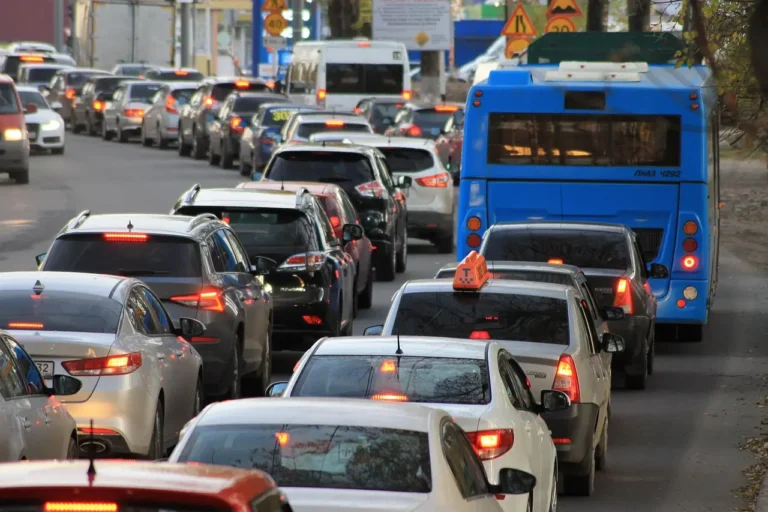
| Stop-and-go congestion | Leave extra space so you can roll forward smoothly instead of braking hard. | Tailgating and forcing chain-reaction stops. |
| Rain, snow, or low visibility | Increase following distance so you have more time to react. | Using dry-weather spacing in poor conditions. |
| Four-way stop with multiple arrivals | Go in arrival order; when vehicles arrive at the same time, yield to the vehicle on the right. | Waving other drivers through and creating uncertainty. |
| Shopping-center entrance | Slow early, scan for pedestrians, and yield when traffic or foot movement is unclear. | Accelerating toward an opening because it looks wide enough. |
| Parking lot crosswalk | Stop for people walking and keep your front wheels straight while waiting. | Squeezing past a crossing shopper to save a few seconds. |
| Backing out near carts and kids | Move slowly, check both sides, and pause if a pedestrian enters your path. | Backing up faster because the lot feels crowded. |
| Truck blind spot | Pass decisively only when there is clear room, then move out of the blind spot. | Hanging beside the trailer where the driver cannot easily see you. |
| RV-heavy vacation corridor | Give extra stopping space and pass only where the lane is open for a clean move. | Cutting in close after overtaking a long vehicle. |
| Lane change in holiday traffic | Check mirrors and blind spots, then signal before you move. | Weaving through traffic without a clear gap. |
| Another driver is impatient | Hold your lane, keep your spacing, and let the impatient driver go by when safe. | Answering aggression with a brake check or a speed contest. |
How do you stay predictable in heavy traffic?
Stay predictable by making each move easy to read. Signal early enough for other drivers to react, keep a steady following gap, and leave room for merging traffic and exit ramps. In congestion, consistency matters more than speed, because sudden lane changes and late signals force others to brake.
Use turn signals early and consistently
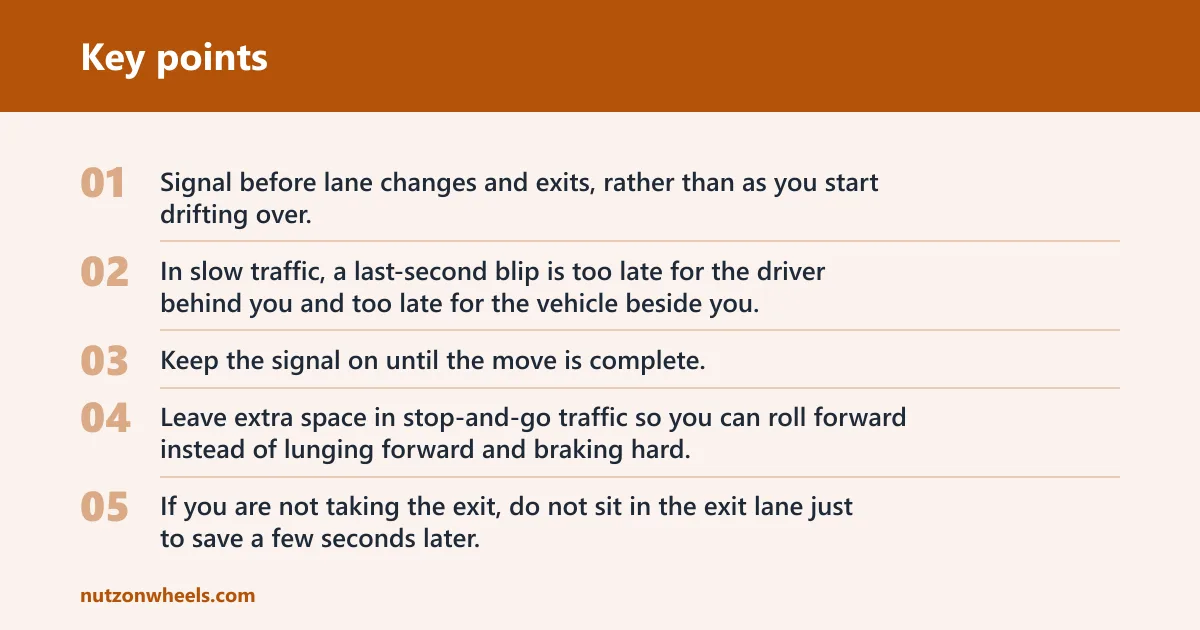
Signal before lane changes and exits, rather than as you start drifting over. In slow traffic, a last-second blip is too late for the driver behind you and too late for the vehicle beside you. Keep the signal on until the move is complete.
Keep a steady following gap
Leave extra space in stop-and-go traffic so you can roll forward instead of lunging forward and braking hard. A larger gap also helps prevent chain-reaction braking, which is common when one car stops abruptly and the next few drivers have no room to react.
Leave room for merges and exits
If you are not taking the exit, do not sit in the exit lane just to save a few seconds later. If you are taking it, move into the lane early enough that drivers around you can see your plan. The polite move is the one that does not surprise anyone.
How do you merge without confusing other drivers?
The polite way to merge in stop-and-go traffic is to use the open lane until the merge point, then take turns one vehicle at a time, where local signs and traffic conditions allow. That zipper merge pattern reduces backup length when traffic is heavy. It works best when drivers keep moving and do not block the lane early.
Use zipper merge timing at lane drops
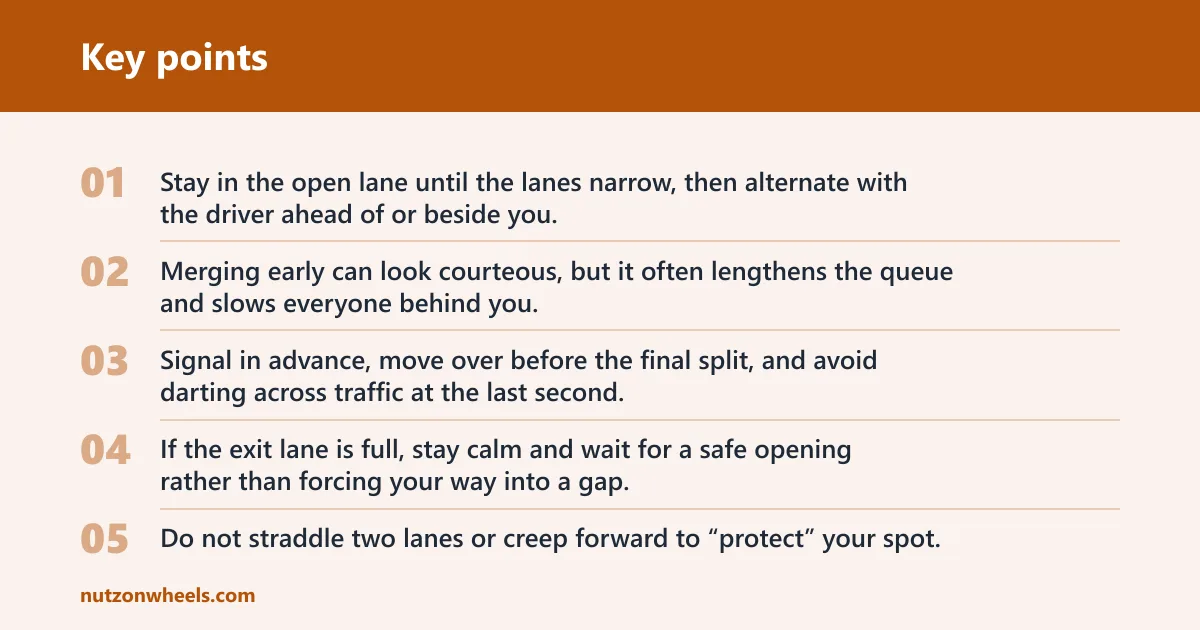
Stay in the open lane until the lanes narrow, then alternate with the driver ahead of or beside you. This is the point where both lanes are supposed to feed into one. Merging early can look courteous, but it often lengthens the queue and slows everyone behind you.
Handle exit ramps and lane endings
Exit ramp backups need the same discipline. Signal in advance, move over before the final split, and avoid darting across traffic at the last second. If the exit lane is full, stay calm and wait for a safe opening rather than forcing your way into a gap.
Avoid blocking the merge lane
Do not straddle two lanes or creep forward to “protect” your spot. That blocks the merge lane and makes other drivers guess what you plan to do. A clear, steady path is safer than trying to claim road space by force.
Picture a two-lane highway near a resort exit. If one lane disappears in 300 feet, the smoother move is to use both lanes to the merge point, then alternate. If every driver shifts over 800 feet early, the backup stretches farther and traffic slows sooner.
What is the courteous way to handle intersections?
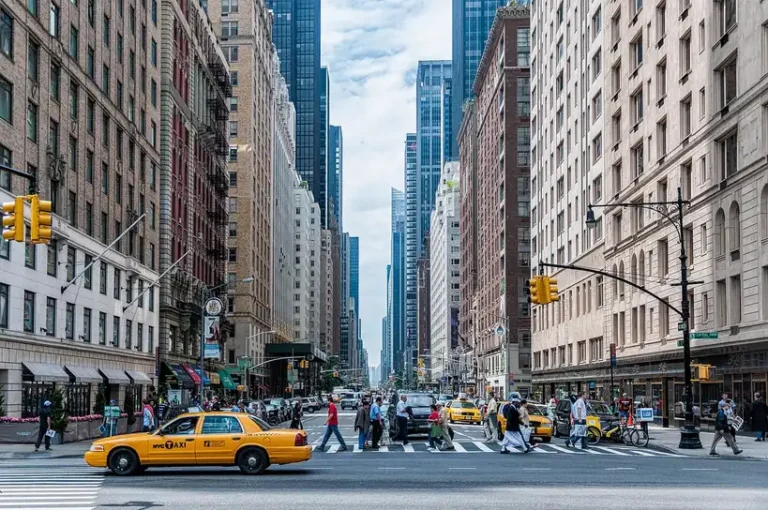
At intersections, courtesy means following right-of-way rules and moving predictably. At a four-way stop, the first vehicle to arrive goes first, and a tie goes to the vehicle on the right. At busy holiday entrances, do not wave people through if that creates confusion or crosses the normal right-of-way order.
Follow four-way stop order and tie-breaks
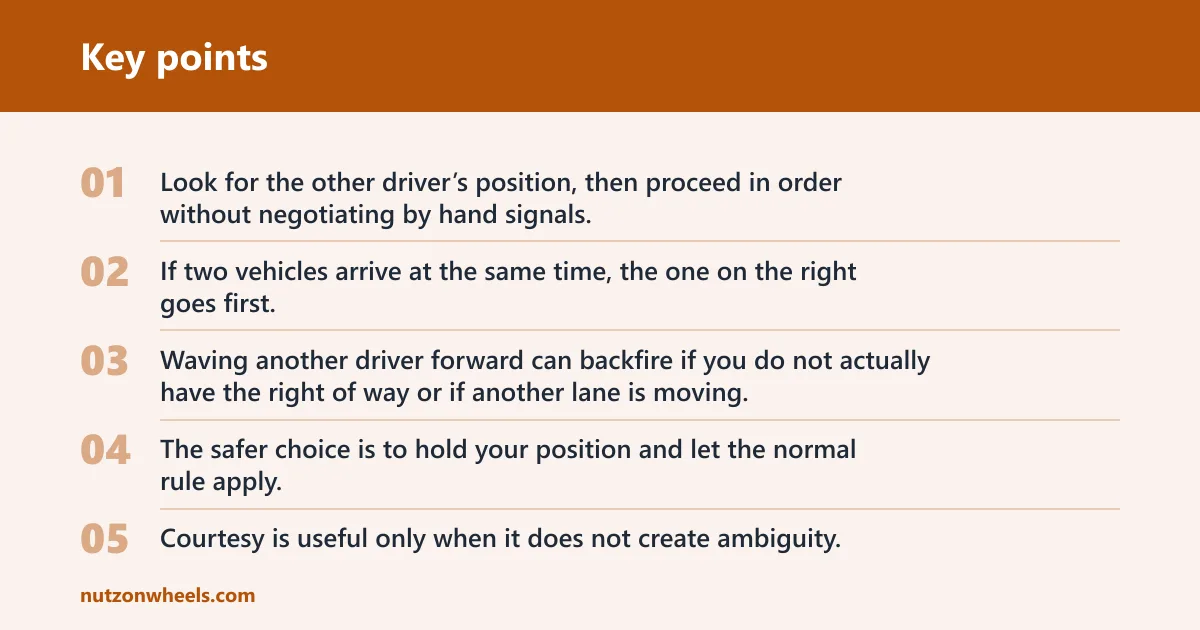
Look for the other driver’s position, then proceed in order without negotiating by hand signals. If two vehicles arrive at the same time, the one on the right goes first. That keeps the sequence clear and prevents two drivers from starting at once.
Do not wave drivers through blindly
Waving another driver forward can backfire if you do not actually have the right of way or if another lane is moving. The safer choice is to hold your position and let the normal rule apply. Courtesy is useful only when it does not create ambiguity.
Yielding at busy holiday entrances
Shopping-center driveways, gas-station exits, and side streets often fill with hesitant drivers. Slow down early, watch for pedestrians, and yield when the next move is unclear. Do not force your way into a gap that is shrinking or hidden by parked vehicles.
How should you drive around trucks and RVs?
Large vehicles need extra stopping distance, wider turns, and more room for lane changes. Stay out of blind spots, pass only when there is clear space, and avoid cutting back in front of a truck or RV too quickly. Holiday routes with more vacation traffic often leave less room for error.
Give large vehicles more stopping space
Leave more room than you would behind a passenger car, especially on downhill grades or in wet weather. A truck or RV generally cannot slow as quickly as a small car, and sudden braking from the vehicle behind can create a pileup. Extra space gives everyone more time.
Stay out of blind spots
If you cannot see the driver’s mirrors, the driver may not see you. Do not cruise beside a trailer or linger next to an RV. Move through the blind spot zone promptly and safely, then return to a visible, open lane position.
Pass only with clear room
Use a steady pass with enough open space ahead to merge back without crowding the vehicle you just overtook. On crowded highways, short lane changes are better than weaving. If the lane ahead is not open, wait.
How do you keep parking lots and sidewalks safe?
Holiday shopping areas carry more foot traffic, more carts, and more half-hidden movement around parked cars. Slow speeds and extra scanning matter more there than in open traffic. Yielding matters more than convenience, because a few seconds saved is not worth a pedestrian conflict.
Watch for pedestrians in shopping areas
Scan crosswalks, cart corrals, and the ends of parked rows before moving. Children may step out from between cars, and adults often look at phones or packages instead of traffic. Move slowly enough that you can stop without a hard brake.
Slow down near carts and backed-in spaces
Backing cars have poor side visibility and drivers may be focused behind them, not on your approach. Keep your speed low and be ready to stop if a door opens or a cart rolls loose. Courtesy here means making your vehicle easy to anticipate.
Yield before convenience
If a walker is already crossing, let them finish. Do not edge forward to save a parking space or force a gap in a crowded aisle. In a lot full of families and luggage, predictable movement matters more than getting through first.
What should you do about aggressive drivers?
Do not answer aggression with your horn, your speed, or a pointed lane block. The goal is to reduce uncertainty, not win a contest. If another driver is tailgating, weaving, or gesturing, keep your lane, keep your space, and let them move on when it is safe.
Reserve the horn for danger
Use the horn only to alert another driver to immediate danger. Keep the warning short and brief. Do not use it to scold, protest, or settle a traffic dispute.
Use cool-down tactics in delays
On a long holiday delay, lower your pace, take a breath, and focus on the next safe move. If the road is crawling, build a larger following gap and stop trying to “make up time” in tiny bursts. Predictability matters more than revenge or proving a point.
Let the aggressive driver go
If someone wants to squeeze past, leave space when you can. That is often the safest outcome. A driver determined to be first is less dangerous when you give them a clear path than when you trap them beside you.
Frequently asked questions
How should you drive courteously in heavy holiday traffic?
Drive courteously by making your next move easy to predict. Signal early, keep a steady gap, stay in your lane, and follow the right-of-way rules at merges and intersections. Holiday traffic gets safer when your actions are visible before they happen.
What is the polite way to merge in stop-and-go traffic?
Use the zipper merge: stay in your lane until the merge point, then alternate one vehicle at a time, where local signs and traffic conditions allow. That keeps the queue shorter and avoids the false politeness of merging too early. Do not block the ending lane or force your way in.
How do you let someone in without creating confusion or a crash?
Letting someone in works best when you can do it without changing the normal traffic order. Slow slightly to create a clear gap, but do not wave if the move would conflict with right of way or surprise other drivers. Clear movement beats vague generosity.
Should you wave other drivers through at a four-way stop?
Usually, no. At a four-way stop, first arrival goes first, and ties go to the vehicle on the right. Waving someone through can create doubt for the other drivers who are waiting. Follow the normal order and proceed when it is your turn.
What should you do when another driver is aggressive in holiday traffic?
Do not match the behavior. Hold your lane, avoid eye contact if it seems to escalate the situation, and keep enough following distance to reduce pressure. If the other driver passes, let them go. The safest reply is a calm, predictable one.
How can you share the road politely with trucks and RVs on vacation routes?
Give them more stopping space, avoid blind spots, and pass only when the lane ahead is clearly open. Do not cut back in closely after passing, and do not sit beside a trailer longer than needed. Large vehicles need room to move safely, especially on crowded holiday corridors.