Road Etiquette: Simple Rules for Safer, Calmer Driving

Good road etiquette means making every move easy to read. Signal before turns with enough distance for others to react, commonly about 100 feet in typical city driving; leave about a 3-second gap by picking a fixed roadside object and counting after the vehicle ahead passes it; keep to the right lane on multi-lane roads unless you are passing or local signs direct otherwise; and do not wave others through unless you actually control the conflict. Get it wrong, and small misunderstandings become hard braking, blocked intersections, side-swipes, and road-rage confrontations. This guide covers lane discipline, merging, four-way stops, parking lots, turn signals, headlights, courtesy, and the common “be nice” habits that actually make traffic less predictable.
Road etiquette works alongside traffic law, not instead of it. The point is simple: other road users should be able to predict the next few seconds of movement from the signals, speed, lane position, and spacing they can see.
What road etiquette actually means
Road etiquette is the set of courtesy-based driving habits that makes legal moves easy for others to read. It matters because crashes and near-misses often start with uncertainty: a late signal, a vague wave-through, a sudden stop, or a driver who yields when everyone expects them to go.
Etiquette works with right of way
Right of way is governed by signs, signals, lane markings, and local law. Etiquette is what keeps compliance low-conflict. At a four-way stop, for example, the courteous move is usually to take your turn clearly when it arrives, not to sit still and start a hand-gesture negotiation.
That distinction matters in merges, roundabouts, parking lots, and school pickup lines. A legal move can still be rude if it is abrupt. A polite move can still be wrong if it breaks the expected order and forces others to guess.
Predictability prevents conflict
Predictability comes from steady speed, stable lane position, visible braking, and early signaling. In normal conditions, leave at least a 3-second following gap by choosing a sign, pole, or shadow the vehicle ahead passes, then counting “one-thousand-one, one-thousand-two, one-thousand-three” until you reach the same point; add more space in rain, darkness, or heavy traffic. That room gives others space to merge, stop, and correct mistakes without panic.
Suppose traffic is moving at 35 mph and a driver in front misses a driveway entrance. The calm move is a smooth brake application with brake lights showing early, then a legal turn or reroute. The risky move is a last-second swerve across the center line or a stop from travel speed with no warning.
Universal norms and local differences
Some etiquette carries almost everywhere: signal before moving laterally, leave room, avoid blocking crosswalks, and use the horn as a warning rather than punishment. Other details vary by place, especially cyclist passing distance laws, headlight flashing rules, lane-use rules, and parking-lot right of way.
That is why the safest approach is to combine universal low-conflict habits with posted signs and local statutes. Courtesy should make the law easier to follow, never blur it.
How to behave at EV charging stations
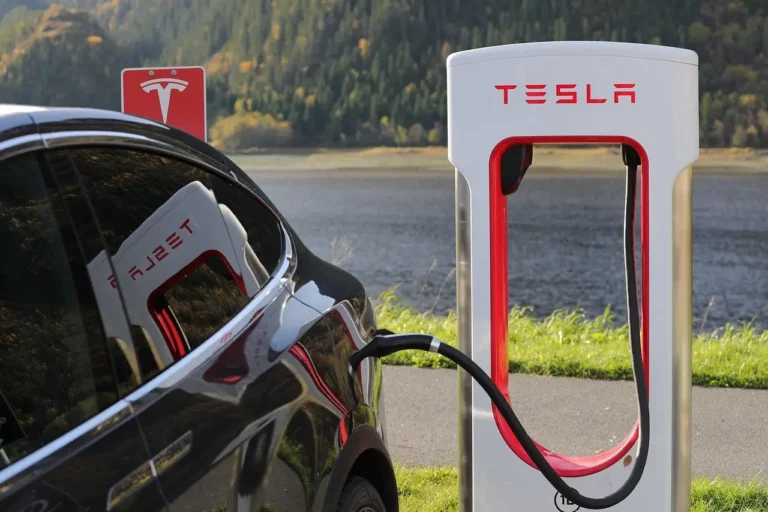
Good EV charging etiquette is simple: take only the stall you need, follow any posted queue, and leave promptly when your car is done. That keeps chargers turning over instead of getting blocked by drivers who linger, skip the line, or treat a charging site like a parking spot.
The supporting guide breaks down what to do when you arrive, how to wait without creating conflict, and what to do the moment charging finishes. It also explains fast-charger priorities and the small courtesy moves that matter most at busy sites, so you can avoid delays for yourself and everyone else. For the full breakdown, see proper etiquette.
The baseline rules that make you easy to read
Signal early and cancel promptly
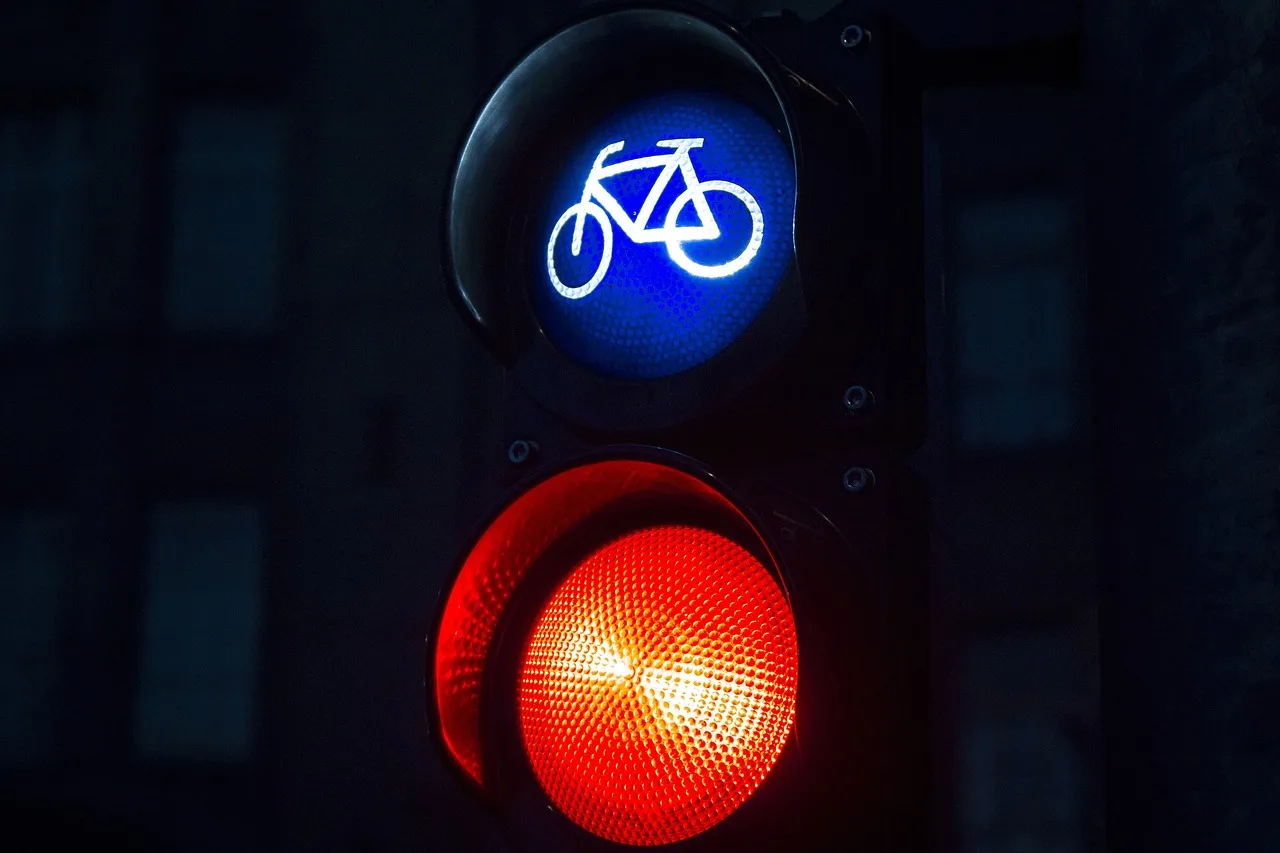
For turns, a common driving-school benchmark is to signal at least 100 feet before the turn where speeds and road layout allow it, roughly five to six car lengths in city traffic. For lane changes and merges, signal before moving, not during the drift. Then cancel promptly so no one reads a stale signal as a new intent.
Use that same habit for freeway exits, pull-outs from the curb, and parking-lot backing. In low-speed areas, early signaling still matters because pedestrians and other drivers have less lane structure to guide them.
Hold a steady speed and lane position
Sudden speed changes create more confusion than many drivers realize. If another vehicle wants to merge ahead and there is room, a small early lift to create space is clear. A hard brake at the merge point is not.
Lane position also communicates. In a roundabout approach, choose the correct entry lane before arrival rather than drifting across lane lines near the yield line. On multi-lane roads, stay in the right lane unless you are passing, preparing for a left turn, avoiding an obstruction, or signs and local rules assign lanes differently.
Leave space others can use safely
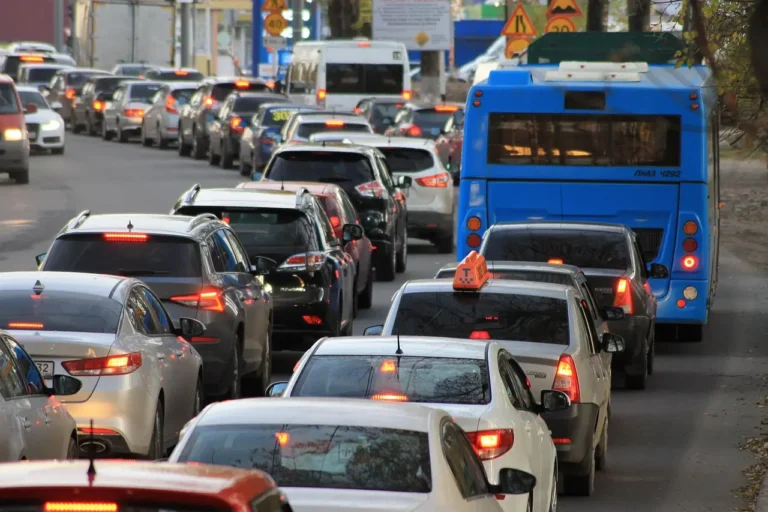
Space is part of communication. A 3-second gap behind the next vehicle gives time to react and also creates a usable cushion for a lawful merge. Tailgating removes that cushion and invites chain-reaction braking.
Space also matters at intersections. Do not enter if the far side is blocked. Blocking the box may feel assertive for three seconds, but it leaves cross traffic and pedestrians sorting out a mess.
Use brake lights and lane changes as communication
Brake lights are an early warning tool, not a final announcement. Light braking before a turn tells the driver behind that speed is changing. A lane change should happen in sequence: mirror check, signal, blind-spot check, then smooth movement into a gap that already exists.
- Check space first. Look ahead, in mirrors, and over the shoulder before any lane change, merge, or pull-out. The move should fit into an existing gap without making another driver brake sharply.
- Signal before moving. Turn on the signal while still centered in the lane. For turns, use at least 100 feet when practical; for lane changes, give enough time for nearby drivers to register the intent.
- Adjust speed early. If a gap needs to be created, ease off the throttle or add light acceleration before the conflict point. Early, small changes are easier to read than late, large ones.
- Move once, smoothly. Make one clean lane change or one clean turn. Drifting halfway, correcting back, or straddling lines tells others that the plan is still uncertain.
- Cancel and reset. Turn the signal off if it does not self-cancel, then rebuild a 3-second gap. One finished action should not create confusion for the next one.
Who goes first without creating confusion?
Who goes first should be decided by the road controls already there: stop signs, yield signs, lane markings, and roundabout entry rules. Good etiquette means following that order clearly and promptly, because “after you” gestures at conflict points often delay everyone and can cause simultaneous starts.
Four-way stops and uncontrolled intersections
At a four-way stop, the first vehicle to stop generally goes first; if two arrive together, the vehicle on the right usually has priority under common U.S. rules, though local law can differ. The etiquette piece is to stop fully, make your turn without hesitation when it is your turn, and avoid waving others through when they are already yielding to you.
Picture two SUVs arriving together at dusk, each creeping forward and each driver waving. Nothing is clearer after the second wave than after the first. A complete stop, a brief check, and one driver proceeding by the usual order is safer than trying to be extra nice.
Merges, yields, and zipper merges
On a standard merge, the entering driver must usually yield, but through traffic should avoid trapping them if a gap can be created safely. In a zipper merge where two lanes reduce to one, use both lanes to the merge point and alternate one-by-one there.
Blocking the disappearing lane half a mile early often creates longer backups and more anger. So does racing to the front and forcing entry. The cleanest pattern is steady speed, full lane use where legal, and one car from each side at the taper.
Roundabouts and lane choice
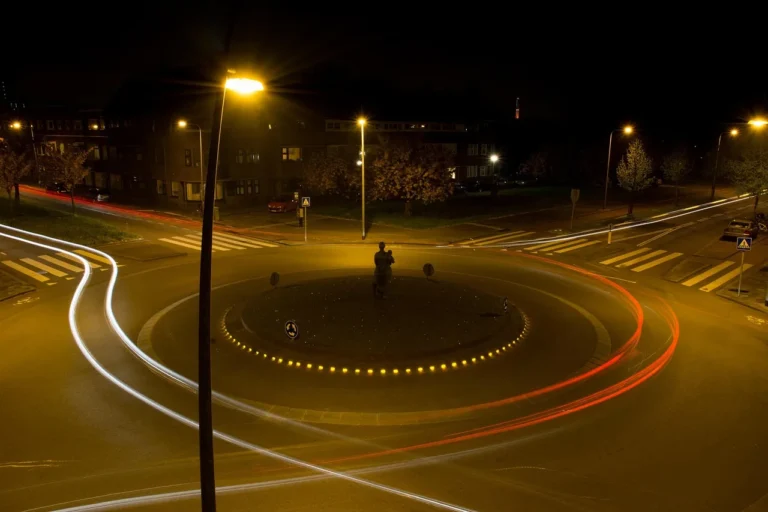
In a roundabout, yield to traffic already circulating. Pick the correct lane before entering based on the destination and any signs or arrows, then stay in that lane until the exit. Last-second weaving inside a roundabout is one of the least readable moves in ordinary driving.
How do you let someone merge or change lanes politely?
Letting someone merge politely usually means creating a gap early while keeping speed changes small and obvious. If a safe gap already exists, hold a steady pace so the other driver can use it. The least helpful move is a last-second brake or a hand wave that invites a guess.
When to create a gap
Create space as soon as it is clear that another driver will need it: an on-ramp ending, a lane closure ahead, or a vehicle signaling from an adjacent lane. A gentle lift of speed several car lengths before the conflict point is easier for everyone behind to absorb than a sharp brake at the merge line.
On multilane roads, moving over can be a good option if the adjacent lane is open and legal to use. That move should happen early and fully, not halfway with the vehicle hanging on the lane line.
When holding speed is better
If the merging driver has already matched traffic and there is a usable gap, the best courtesy is often to do nothing dramatic. Holding a steady pace and lane lets the other driver judge entry. Sudden generosity can be hard to read.
Why last-second braking causes trouble
Hard braking near a merge point compresses traffic behind and can remove the very gap the other driver expected. It also tells the merging driver two different things at once: “come in” and “something is wrong.” Predictable traffic is calmer traffic.
Say your right lane ends in 500 feet because of road work. The driver beside you signals early and begins matching speed. The clean move is to hold steady or ease off slightly long before the taper, leaving one obvious slot. Waiting until the cones begin, then stabbing the brakes to “be nice,” makes the lane reduction harder for everyone.
How should you handle slow drivers and passing?
Handle a slow driver by first rebuilding following distance, then deciding whether a legal pass is available and worth it. The safe etiquette is patient spacing and one clean pass. The unsafe version is tailgating, repeated lane feints, horn pressure, or passing where sight distance is uncertain.
Start with following distance
A slow vehicle ahead is frustrating mainly when the gap disappears. Restoring at least a 3-second following distance improves sight lines, gives more reaction time, and reduces the feeling of being trapped. It also keeps the pass, if one comes, from starting in anger.
Passing on multi-lane roads
On roads with more than one lane in the same direction, pass with a clear speed advantage, complete the maneuver smoothly, and do not cut back immediately. A practical checkpoint is seeing the passed vehicle fully in the interior mirror before returning to the lane, while still maintaining a comfortable buffer.
Once past, resume a normal cruising gap rather than slowing directly in front of the vehicle just passed. Passing should solve a speed difference, not start a contest.
Two-lane passing judgment
Two-lane passing requires clear sight distance, a legal passing zone, and enough acceleration to finish without crowding oncoming traffic or the passed vehicle. If any one of those pieces is weak, waiting is the better choice. Curves, hills, hidden driveways, and wet pavement all cut the margin.
What never to do when frustrated
Do not crowd the bumper, flash high beams repeatedly, straddle the center line to intimidate, or pass and then brake-check. Those moves trade a delay for a conflict. If the vehicle ahead is driving below normal flow but still lawfully, spacing and legal passing are the only useful tools.
When should you use your horn or flash headlights?
Use the horn only as an immediate warning when another road user may not see a hazard or your presence. Flash headlights sparingly, because meanings vary by place and context. Both tools are easy to misread, and prolonged or emotional use tends to turn confusion into confrontation.
Horn use: warning, not punishment
A brief tap is enough for most safety warnings: a car backing toward your lane, a driver drifting into your space, or a light turning green while a stopped driver is looking down and blocking traffic. Long blasts communicate anger more than information.
If the risk has already passed, a horn usually adds nothing. It cannot undo the mistake, and it may escalate the next one. In traffic, the horn should answer one question: does this sound prevent an immediate problem right now?
Headlight flashing and confusion risk
Drivers use headlight flashes for several different messages: “your headlights are off,” “I am yielding,” “go ahead,” or “watch for something ahead.” That variety is exactly the problem. A single flash may mean opposite things to different people.
Because of that, headlights are a weak courtesy tool. They are best reserved for limited situations where the meaning is likely obvious, such as alerting an oncoming driver that their lights are off, subject to local law.
Local legal differences worth checking
Horn rules, high-beam use, and cyclist passing distance are all subjects where state and local law can differ. Some places are stricter about unnecessary horn use. Headlight flashing, especially with high beams, may also be regulated differently depending on jurisdiction and circumstance.
How do you share the road with pedestrians, cyclists, and motorcyclists?
Sharing the road courteously means adjusting for how visible and vulnerable each user is. Pedestrians need low speeds and clear yielding at crossings; cyclists need space and patience during passes; motorcyclists need longer visual checks, more following room, and respect for their full lane position.
Pedestrians at crosswalks, school zones, and neighborhoods
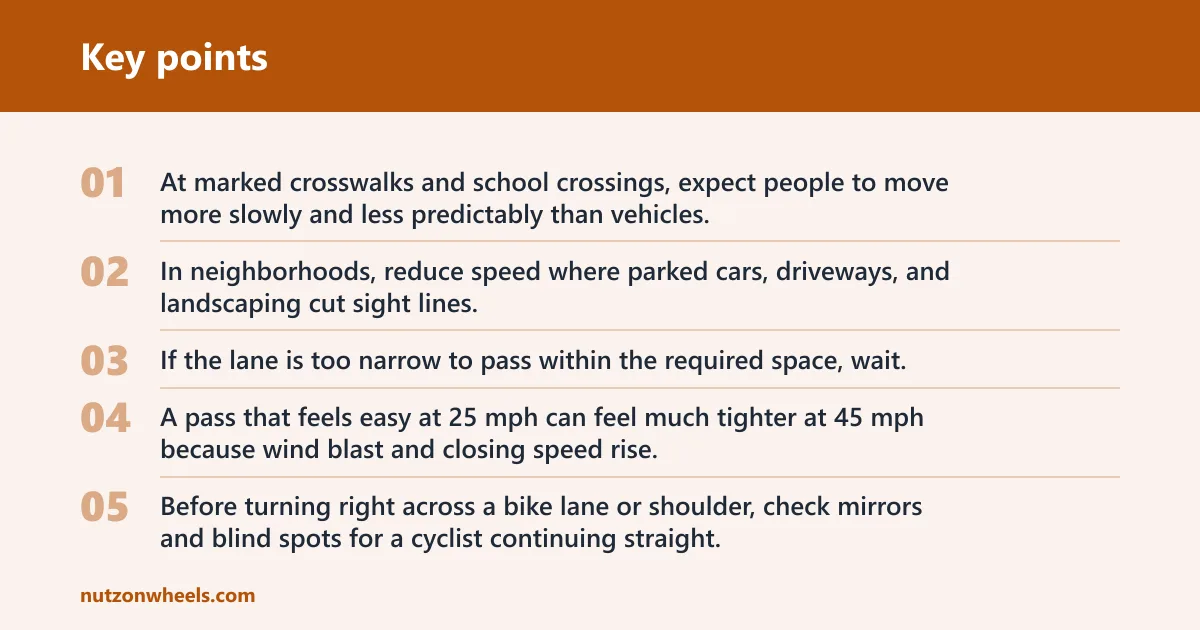
At marked crosswalks and school crossings, expect people to move more slowly and less predictably than vehicles. Stop before the crosswalk line, not on it. In neighborhoods, reduce speed where parked cars, driveways, and landscaping cut sight lines.
Children are the hardest to predict. In school zones, reduced speed limits, crossing guards, buses, and turning parents all stack conflict into a small space. The courteous move is simple: slow earlier, scan wider, and do not squeeze around stopped traffic unless local rules clearly permit it and the path is visible.
Cyclists: passing distance, speed difference, and blind spots
Treat bicycles as traffic, not obstacles. Most states set a specific minimum passing distance or use a general safe-distance standard; 3 feet is a common legal minimum, but some places require more or vary by speed. If the lane is too narrow to pass within the required space, wait.
Speed differential matters. A pass that feels easy at 25 mph can feel much tighter at 45 mph because wind blast and closing speed rise. Before turning right across a bike lane or shoulder, check mirrors and blind spots for a cyclist continuing straight.
Motorcyclists: lane position, visibility, and following space
Motorcycles are smaller in visual profile, but they still need a full lane. Do not crowd within the lane or assume there is room to “share” it side by side unless local law specifically allows a scenario such as lane filtering, and even then the rules can be narrow and location-specific.
Leave extra following distance behind motorcycles. They may slow quickly by downshifting even before the brake light becomes the main cue. Also watch carefully before turning left across their path; a common crash pattern is the looked-but-failed-to-see conflict where the driver sees a gap but misjudges the motorcycle’s approach.
Parking lots and school zones
Backing out and aisle conflicts
Parking lots mix pedestrians, carts, backing cars, angled parking, and weak lane control. Backing drivers usually have the higher duty to yield because their view is restricted, but through drivers should still creep, cover the brake, and expect sudden movement.
When two vehicles back from opposite spaces at once, stopping and reassessing beats trying to “thread” past each other. If a larger vehicle blocks the view, inch out only enough to gain sight, then stop again if needed.
Unmarked right of way and pedestrian mixing
Many parking lots have arrows, stop bars, or lane markings, but many do not. In those areas, there may be no strong universal right-of-way rule beyond general care and yielding to immediate hazards. That makes etiquette more important: slow speed, no diagonal shortcuts across empty rows, and no rolling through crosswalks because “it’s only a parking lot.”
Drop-off, pick-up, and stopped-vehicle etiquette
School pickup lines produce double-parking, U-turn attempts, and pressure passing around stopped cars. The safer etiquette is to stay in the established queue, load and unload only where allowed, and keep crosswalks, bus zones, and driveways clear.
A common first-timer mistake is trying to save 30 seconds by stopping in the travel lane just short of the curb. That forces others to swing wide around a blind-side child zone. In school traffic, saving a little time is rarely worth adding one hidden conflict.
Driving situations table
| Situation | Best etiquette move | What not to do | Why it reduces conflict |
|---|---|---|---|
| Merging onto a highway | Match traffic speed on the ramp, signal early, and enter an existing gap; through traffic can ease off slightly or move over early if safe. | Stop at the end of the ramp without need, or brake sharply in the through lane to “let someone in.” | Both drivers get one clear plan instead of two late corrections. |
| Slow driver ahead | Open a 3-second gap, wait for a legal pass, and complete it once with a clear speed advantage. | Tailgate, fake a pass, or use repeated horn or high-beam pressure. | Distance restores sight lines and keeps frustration from turning into retaliation. |
| 4-way stop confusion | Stop fully, follow arrival order or the driver-on-the-right rule where applicable, then go decisively when it is your turn. | Wave others through when they are already yielding to you, or creep into the intersection to negotiate. | Everyone reads the same order instead of reacting to hand gestures. |
| Parking lot backup | Back slowly, pause when sight is blocked, and yield to aisle traffic and pedestrians. | Shoot out of the space, or assume the moving car will stop because it sees you. | Restricted visibility is handled with time and small movements. |
| Cyclist pass | Wait until the lane is wide enough or move fully over, leaving at least the local legal minimum distance; more room is better at higher speed. | Squeeze by inside the lane or pass and turn right immediately across the cyclist’s path. | Extra lateral space accounts for wobble, wind blast, and speed difference. |
| Motorcycle ahead or beside | Give the motorcycle a full lane, check twice before lane changes or left turns, and leave extra following distance. | Share the lane side by side, crowd at stops, or follow too closely. | The rider stays visible and has room to maneuver around hazards. |
| School zone | Slow to the posted limit, scan sidewalks and between parked cars, and stay in the pickup pattern. | Pass stopped traffic aggressively or stop in the travel lane for convenience. | Lower speed and simpler movement reduce the chance of a child appearing from a blind spot. |
| Tailgating from behind | Keep a steady speed, increase space ahead, and move right or let the driver by when safe. | Brake-check, block a pass, or escalate with gestures. | More space ahead gives room to respond without a rear-end chain reaction. |
| Horn use | Use one brief tap for an immediate warning, such as a drift into your lane or a backing conflict. | Lean on the horn after the danger has passed or use it to punish. | Short warnings carry information; long blasts mainly carry anger. |
| Headlight flashing | Use sparingly, if at all, and only where the meaning is likely obvious and legal, such as alerting an oncoming driver that lights are off. | Flash to wave someone through a conflict point or assume one universal meaning. | It avoids mixed signals where one driver reads “go” and another reads “I’m going.” |
| Zipper merge | Use both lanes to the merge point where signed or appropriate, then alternate one vehicle from each lane. | Block the closing lane early or race ahead and force entry at the cones. | Alternating at the taper keeps traffic organized and reduces lane-policing behavior. |
| Letting someone in | Create a gap early with a small speed adjustment, or hold a steady pace if a gap already exists for them to use. | Stop in moving traffic, wave vaguely, or brake at the last second. | Early, visible spacing gives the other driver one clean opening to judge. |
Frequently asked questions
What is road etiquette and why does it matter?
Road etiquette is the set of driving habits that makes legal movement obvious to everyone else. It matters because predictable speed, signaling, spacing, and yielding reduce hard braking, side-swipes, blocked intersections, and the anger that grows when drivers cannot tell who is doing what next.
What are the basic rules of road etiquette every driver should know?
Signal early, keep at least a 3-second gap by using a fixed-point count, hold a steady lane, stay to the right on multi-lane roads unless passing or preparing for a required maneuver, stop before crosswalks, and avoid hand-wave negotiations. Courtesy should support posted rules and right of way, not replace them with improvised “nice” gestures.
How do I let another driver merge without causing confusion?
Create space early with a small lift of speed if needed, or hold a steady pace when a safe gap already exists. Avoid last-second braking, vague hand motions, and stopping in flowing traffic. The other driver needs one readable opening, not a changing plan.
When should I use my horn without being rude?
Use the horn only for an immediate safety warning: a car drifting into your lane, backing toward you, or failing to notice a green light while blocking traffic. A short tap works best. Long or repeated honking usually sounds punitive and raises tension.
How do I share the road courteously with motorcycles and bicycles?
Give each a full lane of respect, but adjust for their different risks. Cyclists need lawful passing distance and care at right turns. Motorcyclists need extra following space, better left-turn checks, and room for lane positioning to avoid debris, potholes, and visibility problems.
How do I drive courteously in parking lots, school zones, and neighborhoods?
Slow well below main-road speed, expect pedestrians anywhere, and treat backing vehicles and blind corners as active hazards. In school zones, follow the queue, keep crosswalks clear, and do not pressure your way around stopped traffic. In neighborhoods, drive as if a child could appear between parked cars.